
Blog/Toploader vs magnetic holder
Guide
Toploader vs magnetic holder vs slab case: which holder for which card
Each holder guards against a different thing. Here is what each one does, and when a card actually needs it.
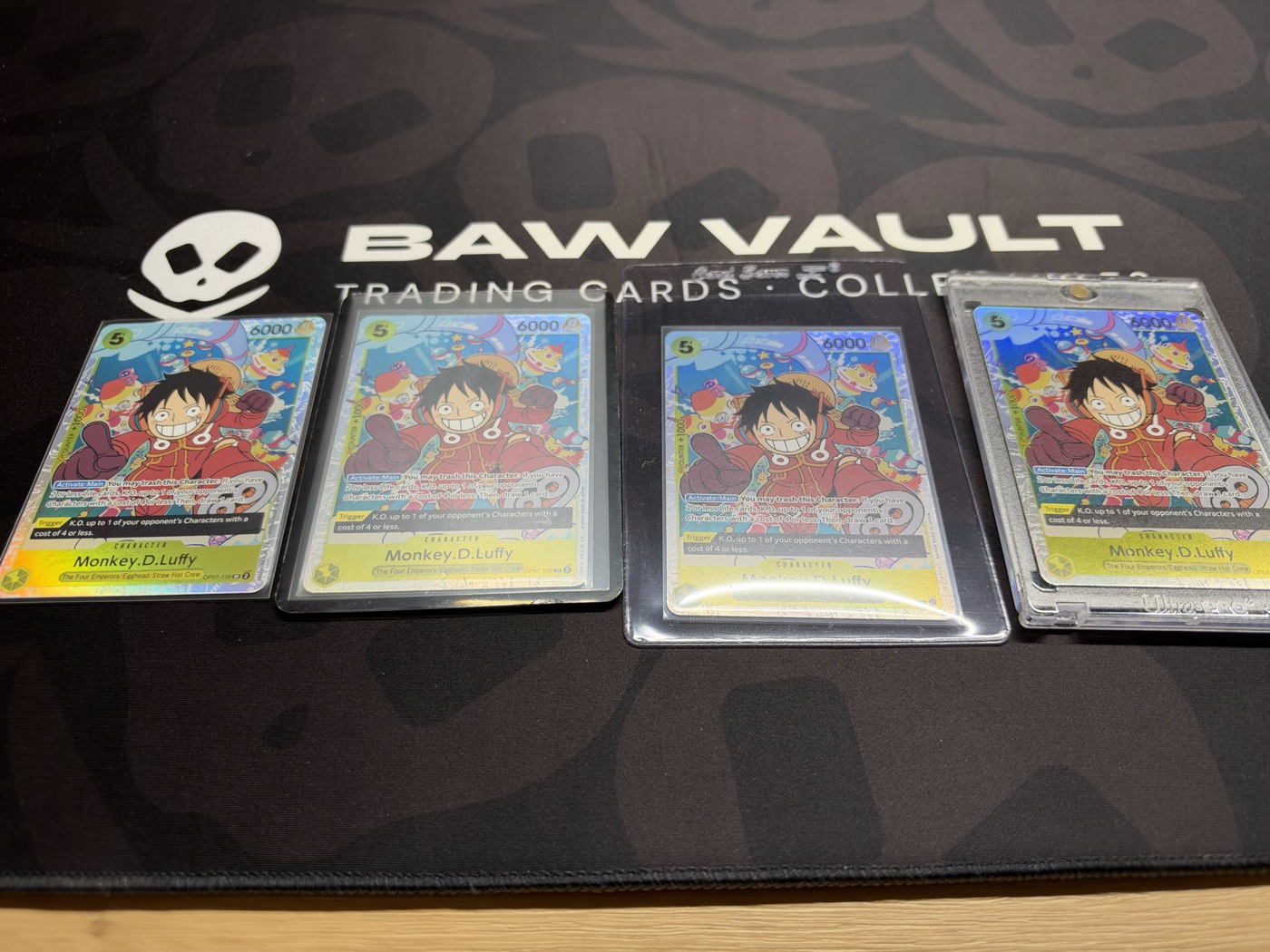
The short version
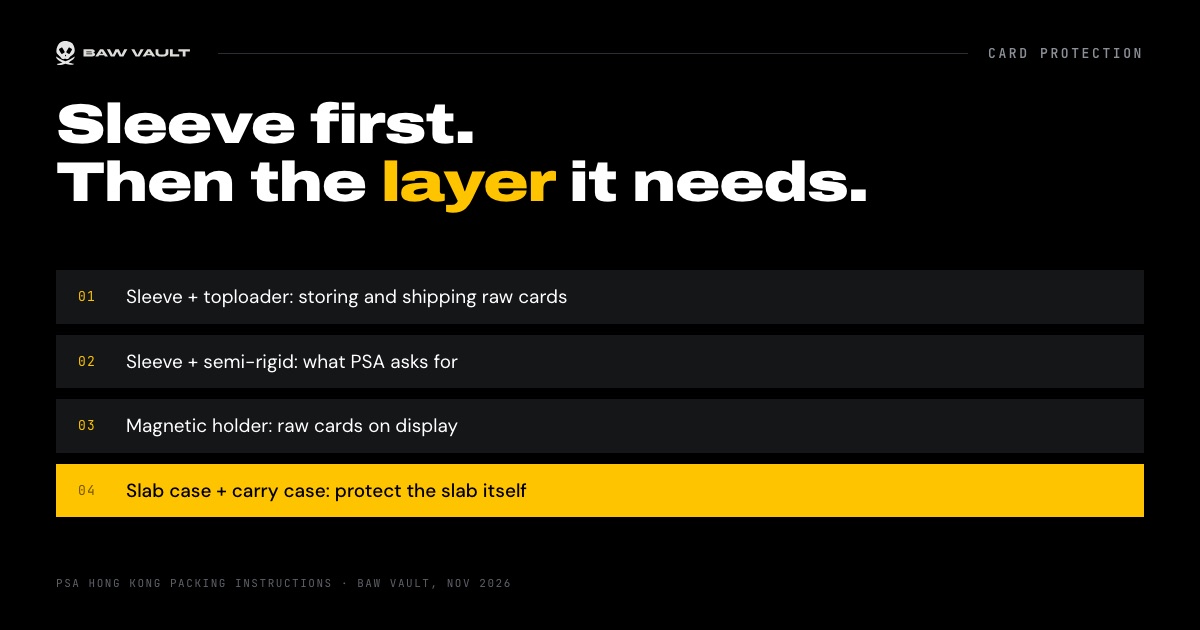
- Sleeve first. A toploader or semi-rigid goes over a sleeved card, never a bare one.
- Toploader: rigid and open at the top. The everyday holder for storing, sorting and shipping raw cards.
- Semi-rigid: what PSA asks for. Its Hong Kong instructions say a sleeve inside a Card Saver, not a toploader.
- Magnetic holder: closed on every side. For a raw card you display, or a valuable one you will not grade.
- Slab case and carry case: grading protects the card, not the slab. A slab case guards the slab; a carry case moves many.
I buy and sell One Piece and Pokémon cards out of Kaohsiung, and I keep my own slabs in the cases further down this page.
"Toploader vs magnetic holder" is the wrong fight. They do different jobs, and so do the slab and its case. The useful question is which problem you are solving.
My first instinct with a raw card I care about is a toploader, and it is my holder for anything I keep medium to long term. A card I am setting aside for later goes in one too.
A card I know I am about to grade goes in a semi-rigid, but only until it is sent. A semi-rigid is never my long-term holder. An old card I do not plan to grade goes in a magnetic holder inside an aluminium case, so it stacks with my cased slabs.
Every holder, and what it is for
| Holder | Protects against | Does not | Use it for |
|---|---|---|---|
| Penny sleeve | Surface scratches, fingerprints | Bends | Every card, first |
| Toploader | Bends, knocks | Sliding out of the open top | Storing, sorting, shipping raw cards |
| Semi-rigid (Card Saver) | Light bends | Hard knocks | Grading submissions, short term |
| Magnetic holder | Bends, dust, handling | Take hard knocks the way a case does | Raw cards on display |
| Slab | The card, sealed | Scuffs on the slab itself | Graded cards |
| Slab case | Scuffs on the slab | Moving many at once | Slabs on a shelf or in hand |
| Carry case | Knocks in transit | Display at home | Taking slabs out of the house |
Holders are sold by thickness, in pt. 35pt is usually the size sold for standard trading cards. A thicker card needs a thicker holder, so check the card before you buy a box of them.
Toploader vs semi-rigid: the grading rule
These two look alike and get mixed up. A toploader is stiff. A semi-rigid bends a little, which makes it easier to get the card out again.
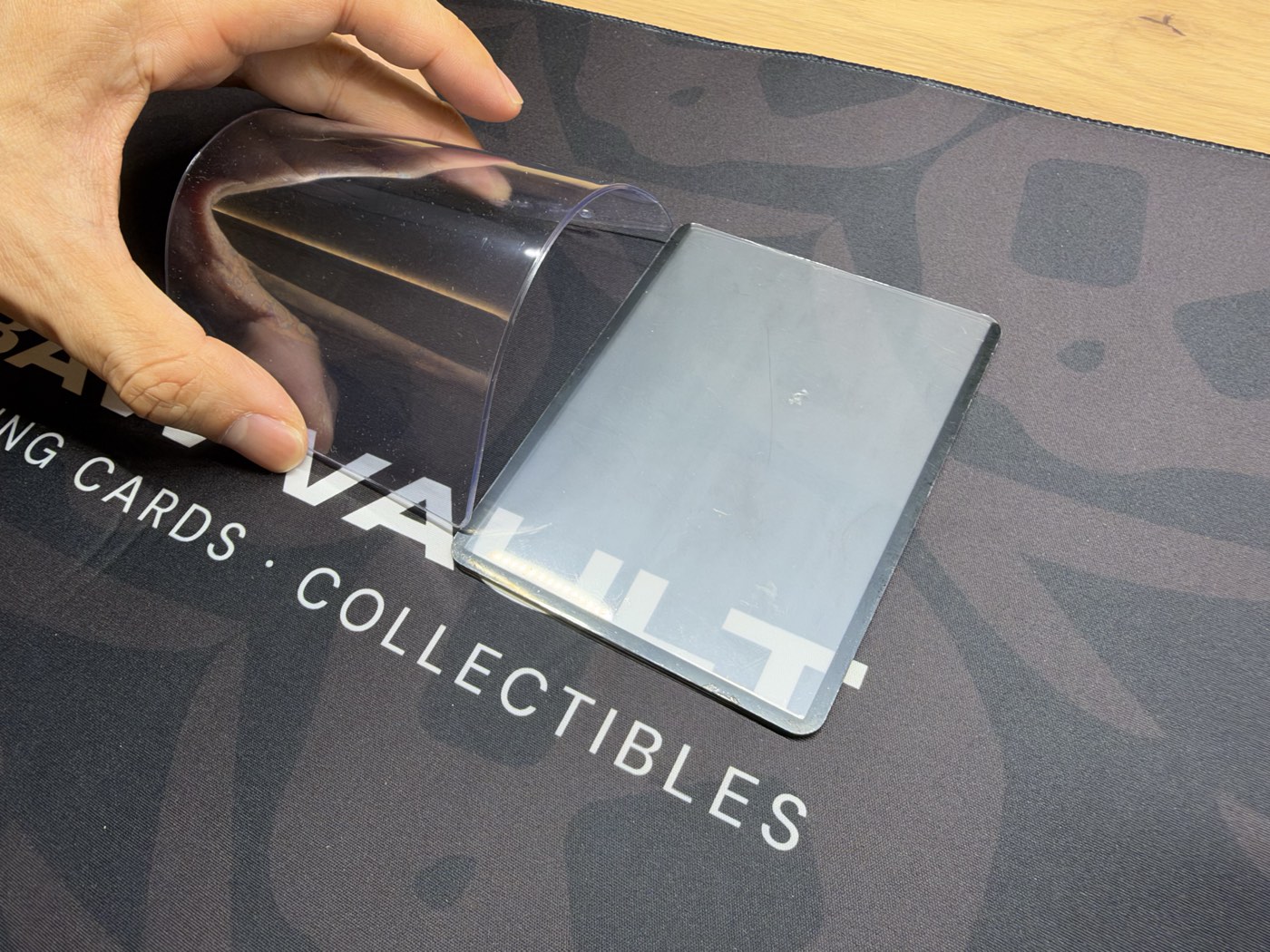
That is why PSA sets the packing. Its Hong Kong instructions ask for each card in a sleeve inside a Card Saver. Not a toploader, not a screw-down. The rest of the submission is in my guide to grading with PSA from Asia.
Away from grading, the toploader wins. It is stiffer, and a raw card in a toploader is the standard way to store or ship a single.
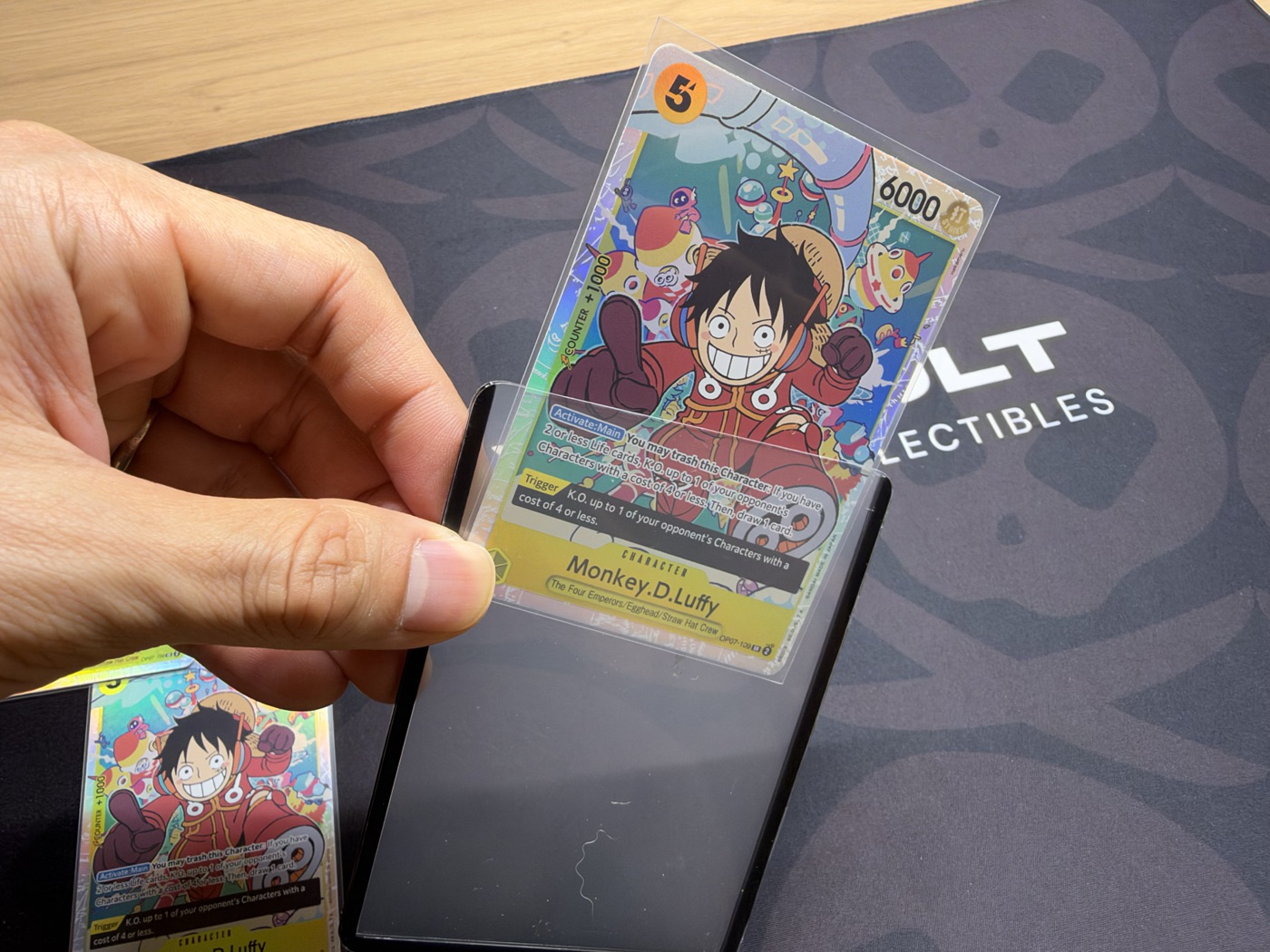
Its weak point is the open top. A card can slide out if the holder is tipped over, so for shipping it goes into a team bag that seals over the top.
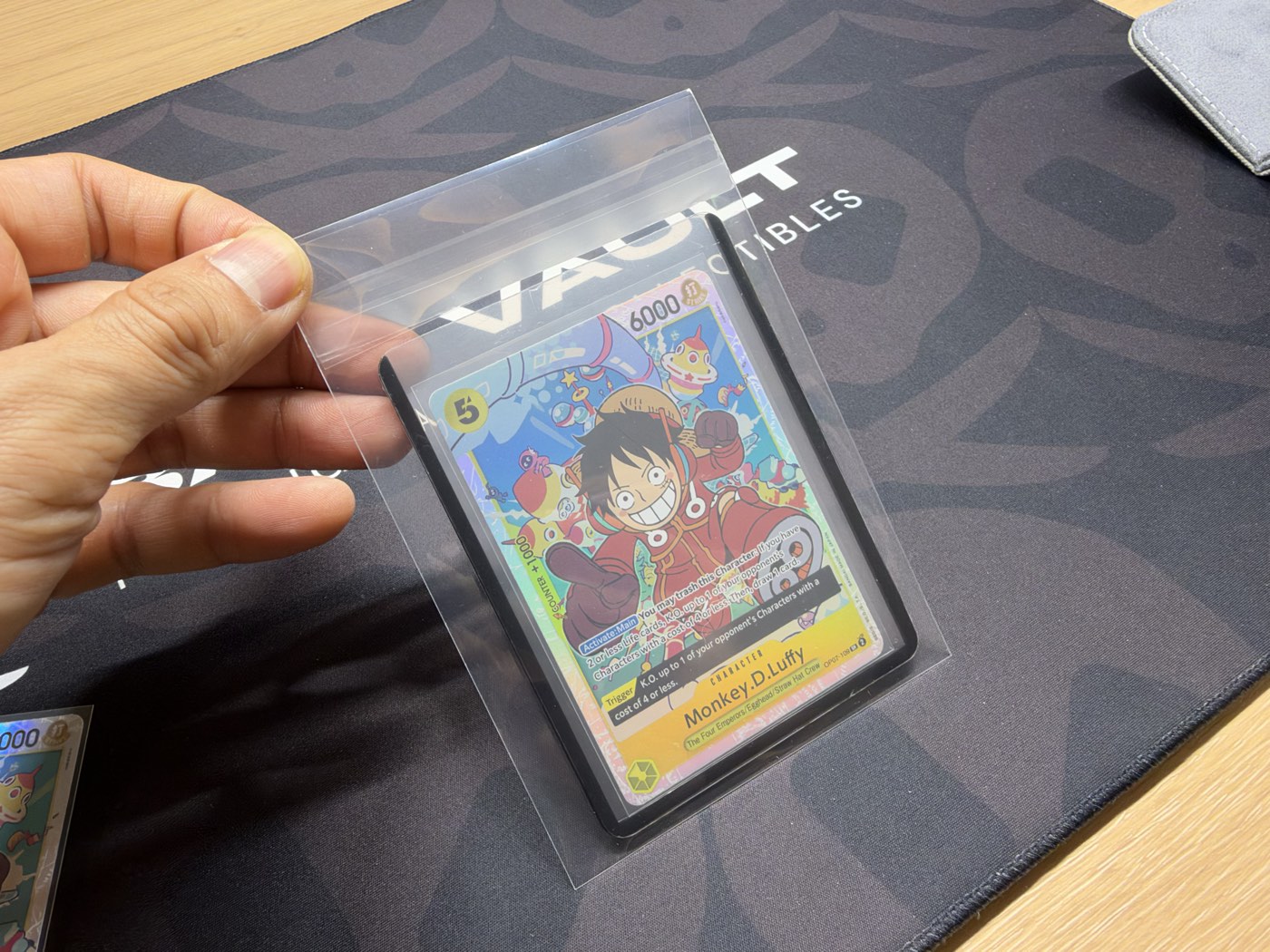
When I ship a raw card: penny sleeve, toploader, then between two cardboard protectors. Bubble wrap goes around that, and it all goes in a cardboard box.
Toploader vs magnetic holder: which raw cards get which
A magnetic holder is a rigid case that closes with magnets. The card sits in a recess, closed on every side, and it opens without screws.
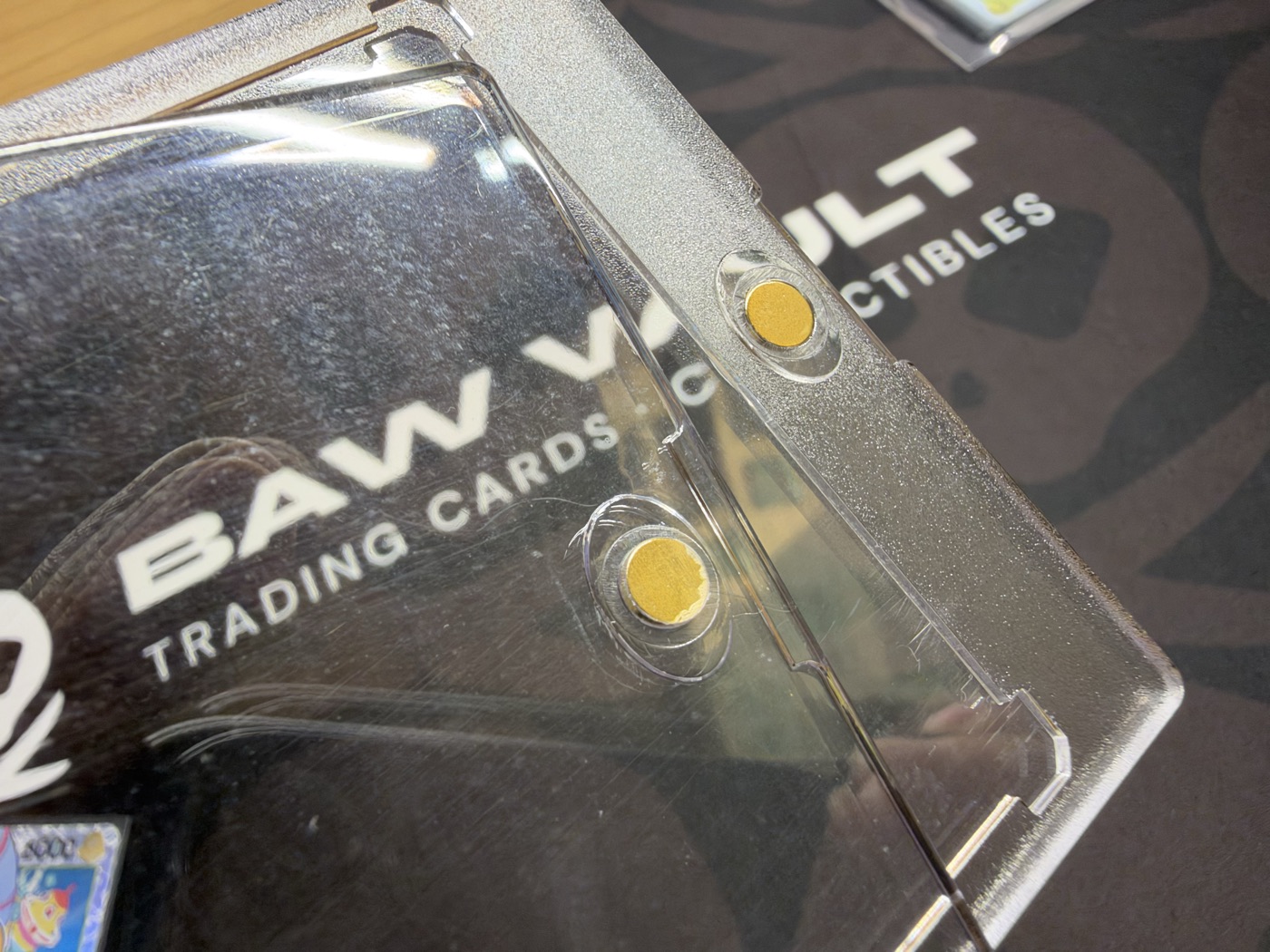
That makes it the holder for a raw card you look at, show or pass around. The card is sealed in, so dust and fingers stay off it.
Many magnetic holders are sold as UV-blocking; a basic toploader may not be. Check the listing rather than assuming either way.
I sleeve the card first. Mine are KMC Perfect Fit sleeves. Most magnetic holders I have used take a perfect-fit sleeve of about 64 x 89 mm. Some have room for a looser 65 x 91 mm sleeve. Check the inner size on the holder's listing.
The KMC link goes to Amazon. As an Amazon Associate I earn from qualifying purchases.
The toploader stays the right call for everything else: the binder box, the stack waiting to be sorted, the card in the post. It costs less per card, which adds up across a collection.
Whether a card earns the dearer holder comes down to what it is worth to you. If you want a number, my buylist shows what BAW VAULT pays for it, raw and PSA 10.
My rule for which raw cards get one: valuable cards I do not plan to grade. Those are usually vintage, where the condition would not earn a high grade anyway. The other kind is a cheap card that means something to me and that I want on display.
For an old card I am not grading, there is one more layer. Kalijoy's 35pt case is made for a PSA slab, but a 35pt magnetic holder sits in it too. The aluminium frame and soft lining take the knocks, and it stacks with my cased slabs.
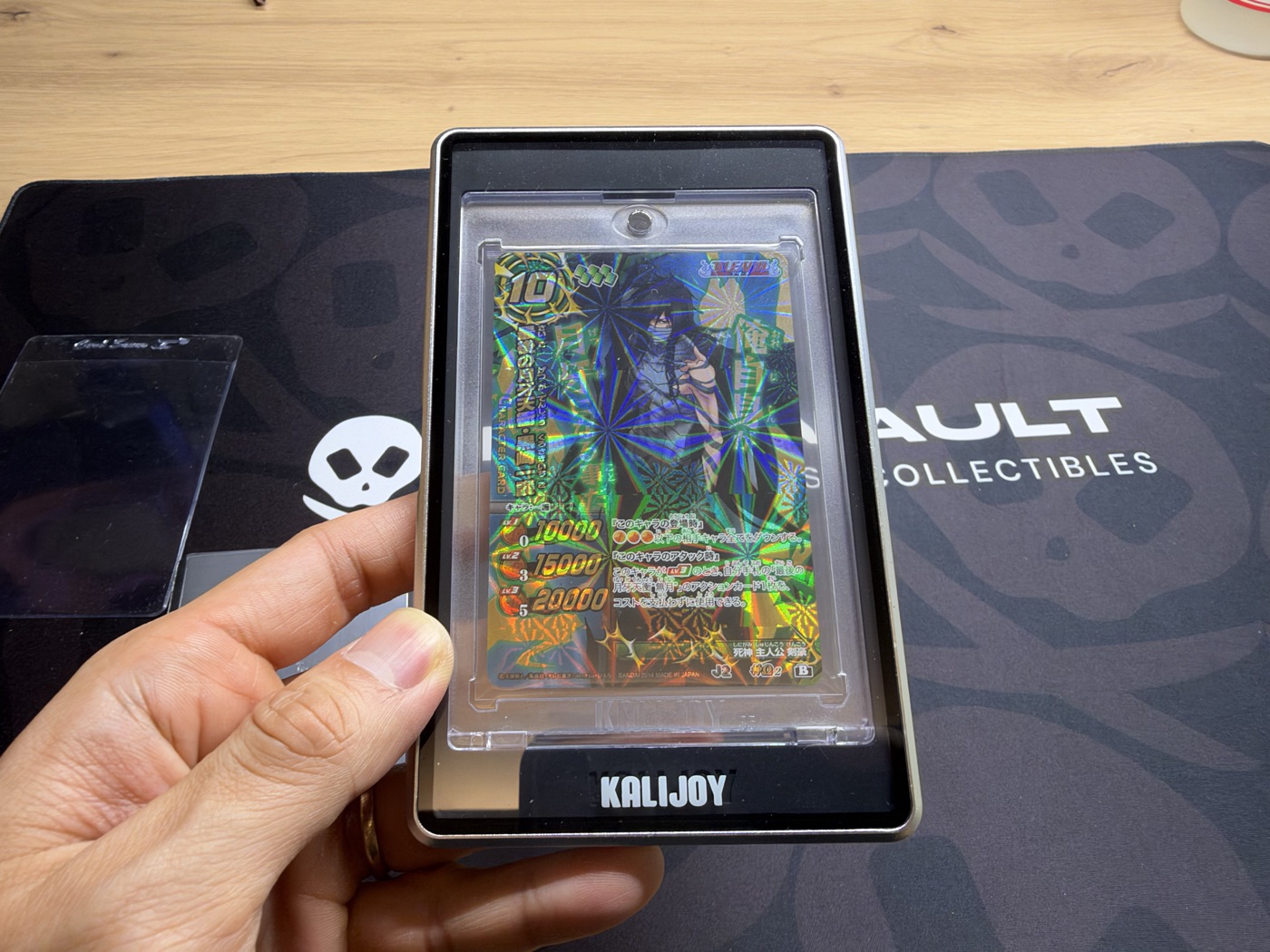
BAWVAULT10 takes 10% off (not stackable with their other offers), and Kalijoy gives me a small kickback on orders through this link, at no extra cost to you. List price 25.99 USD at the time of writing.
See the 35pt case at Kalijoy →
Once it is graded: the slab, the slab case and the carry case
A slab seals the card. It does not protect itself. Slabs pick up scuffs in transit and on the shelf, and in my experience a scratched slab sells for less even when the grade has not moved. If yours is already scratched, PSA can move the card into a new holder; see PSA reholder, crossover and review.
That is the job of a slab case. The ones I use are Kalijoy's: an aluminium frame with tempered glass on both sides, sized by slab thickness, and they stack.
BAWVAULT10 takes 10% off (not stackable with their other offers), and Kalijoy gives me a small kickback on orders through this link, at no extra cost to you.
See the slab cases at Kalijoy →
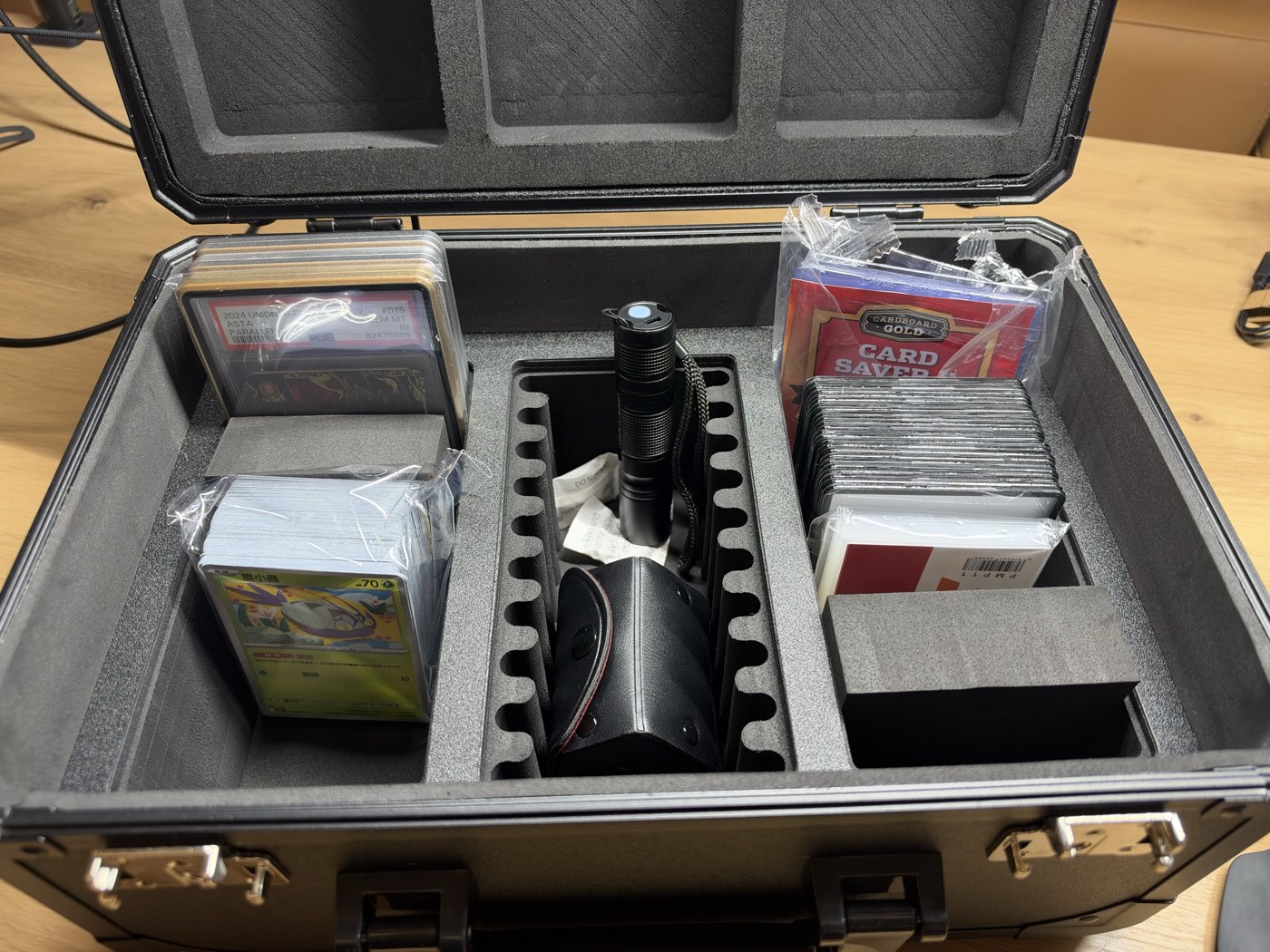
A carry case is for moving many slabs at once. In the K CASE I use, a pulled tray takes toploaders and semi-rigids as well as slabs, which matters on a show day.
- The Totem T-AM060 is the lighter one, with TSA locks. It is the case in my Short on getting cards to a card show.
- The Kalijoy K CASE is all metal and heavier. Pull a tray out and that row takes toploaders or semi-rigids.
A holder is not a dry box
None of these keeps out the damp of a Taiwanese summer. A toploader is open at the top, and closing a holder is not the same as keeping air out.
Keeping cards dry is about where the box lives, not which holder is inside it. That is a separate question from this one.
The brands I actually buy
For toploaders and semi-rigids I buy HUIZHIBAO, a Chinese brand. Its toploaders come with coloured borders as well as clear.
Its semi-rigids are thicker and firmer than the Card Saver that PSA names, which in my experience is soft, flexes easily and attracts dust. Once it ships, a card can sit in its semi-rigid in PSA's queue for months, and a flimsier holder gives pressure marks, warping and dust imprints more time to form.
PSA's instructions name the Card Saver, so check that your submission route accepts another brand before you switch.
Which one to use, by situation
- You just pulled or bought a card you care about: sleeve, then toploader, the same day. It is also the holder for medium- to long-term storage.
- You are sending it to PSA: sleeve, then semi-rigid. Not a toploader, and the semi-rigid only until it ships.
- It is a raw card you display or will not grade: sleeve, then a magnetic holder in the right thickness. Add an aluminium case if it sits with your slabs.
- It is a slab you show or handle: a slab case, so the scuffs land on the case.
- You are going to a card show: a carry case for slabs, plus spare sleeves, toploaders, semi-rigids and team bags.
The cases I keep my own cards in are on my gear page.
Read next
PSA grading from Asia: routes, real costs and wait times
If the card in the toploader is worth grading, the routes, costs and packing.
Totem T-AM060 review
The carry case from my card show Short: what fits, and what I would change.
Kalijoy K CASE review
The all-metal carry case for 24 slabs, hands-on: the build, the trays, and two things I would change.