
Blog/One Piece card rarity
One Piece value
One Piece card rarity explained, from C to Manga
How to read the rarity mark on any card from Bandai's One Piece Card Game, shown on cards from my own collection, and which tiers matter when you buy or sell.
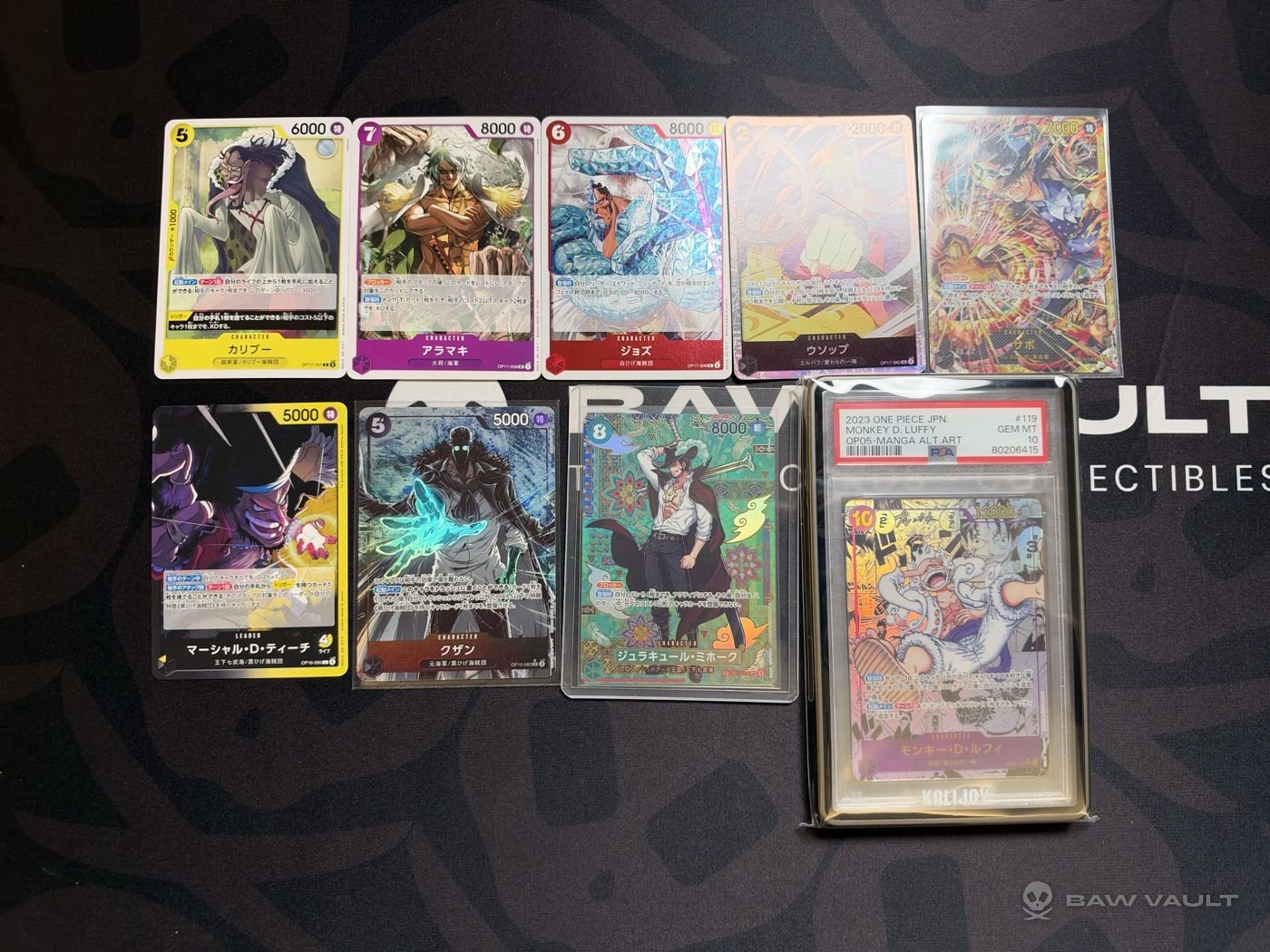
The short version
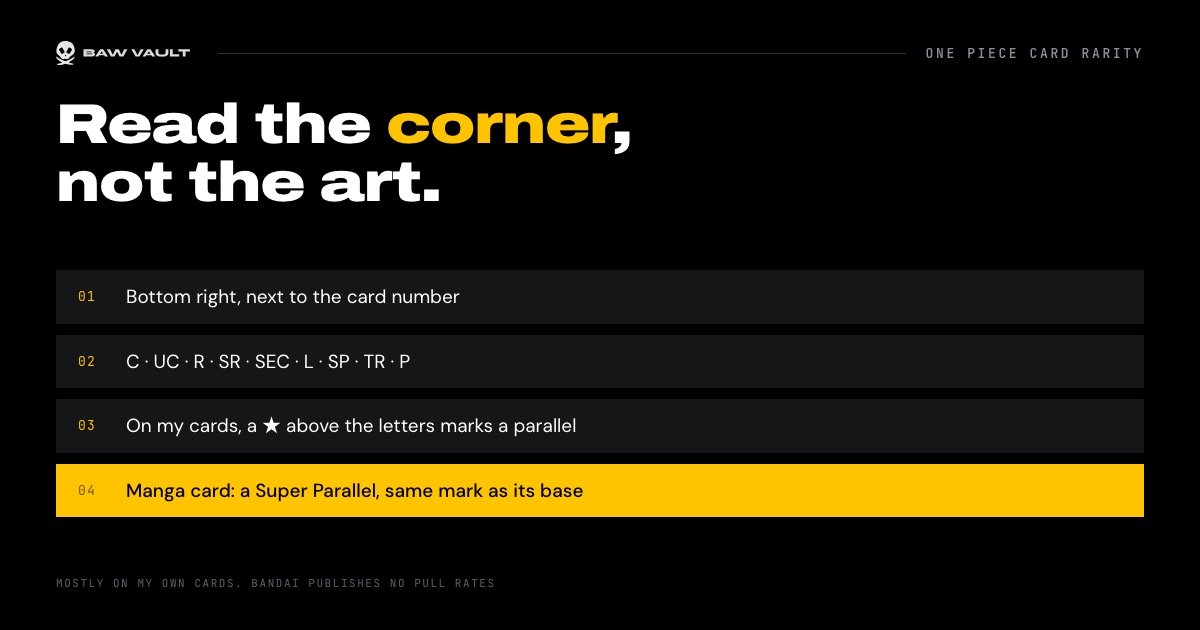
- The rarity is printed bottom right, next to the card number: C, UC, R, SR, SEC, L or P in the box, with SP or TR as a tag in front of the number.
- A parallel (alt art) keeps its base card's rarity letters. On my cards, a small ★ sits above the mark.
- The "Manga" card is Bandai's Super Parallel. Like any parallel it keeps its base card's mark: SEC on my Luffy, SR or R on others.
- DON!! cards have no rarity. Promos carry a P; prize cards are often stamped, some serial-numbered.
- Bandai publishes no pull rates. Treat any rate you read as someone's estimate.
This covers Bandai's One Piece Card Game, launched in Japan in 2022, with booster codes from OP-01 up. Other One Piece card games, older or newer, are not covered here.
I'm a Singaporean collector buying and selling cards out of Kaohsiung. Every photo on this page is a card I own, shot on my own mat, except Bandai's sample images for the cards I do not own yet, labelled where they appear. Where a fact comes from Bandai rather than my own cards, I say so.
Where to find the rarity
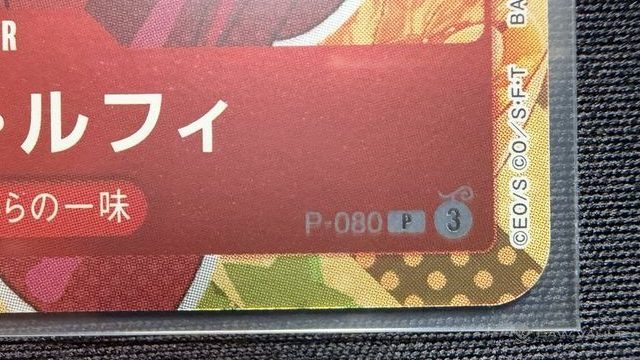
Look at the bottom right of the card, beside the card number. The letters in the small box are the rarity. The number in the circle next to it is not rarity (more below).
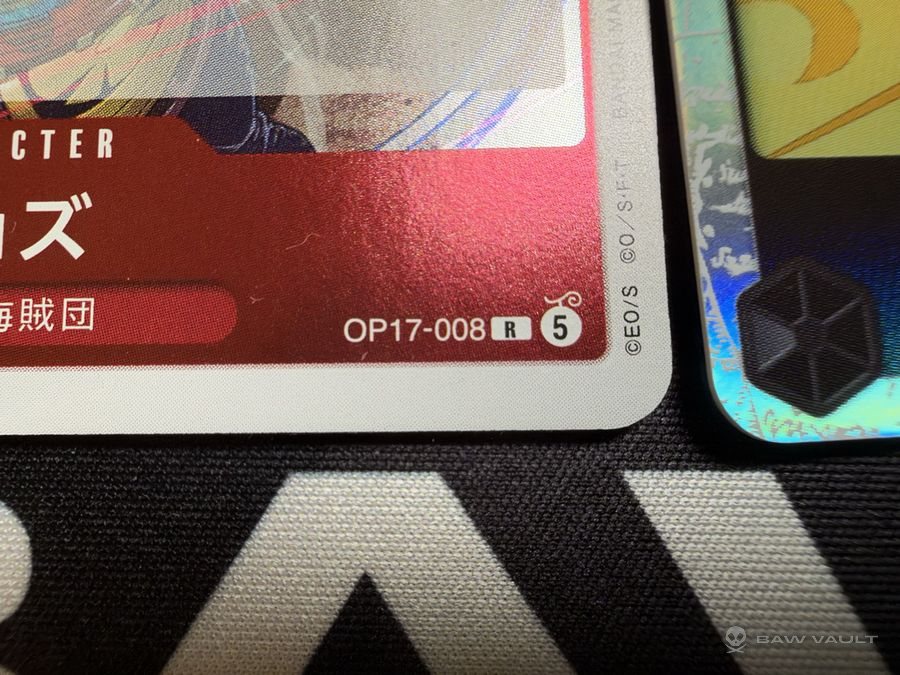
The rarity marks, one by one
Bandai's Japanese card list filters by exactly nine marks. Here they are with the official names:
| Mark | Official name | What it is |
|---|---|---|
| C | Common | The bulk of every pack |
| UC | Uncommon | A step up, still plentiful |
| R | Rare | A step above UC |
| SR | Super Rare | The main hits of a set |
| SEC | Secret Rare | The top regular rarity in a booster |
| L | Leader | Leader cards, a card type with its own mark |
| SP | Special Card | New art of an earlier card, inserted in a later booster |
| TR | Treasure Rare | Added later than the others, a tag in front of the number like SP (more below) |
| P | Promotion | Promo cards, numbered P-001 and up |
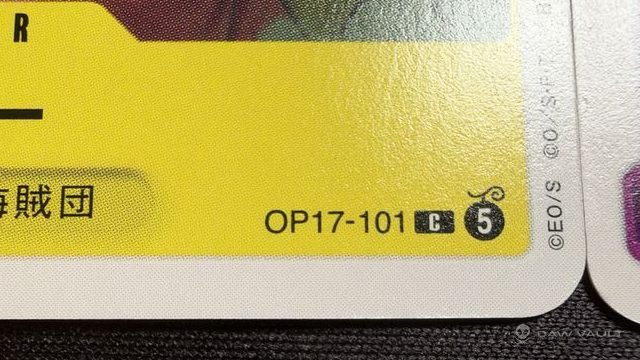
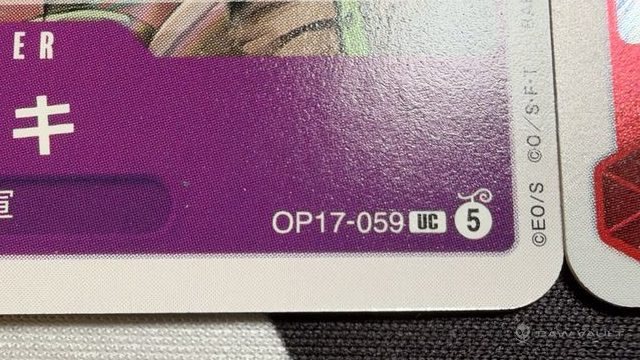
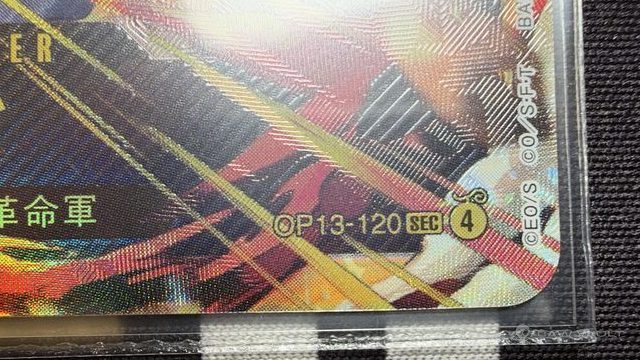
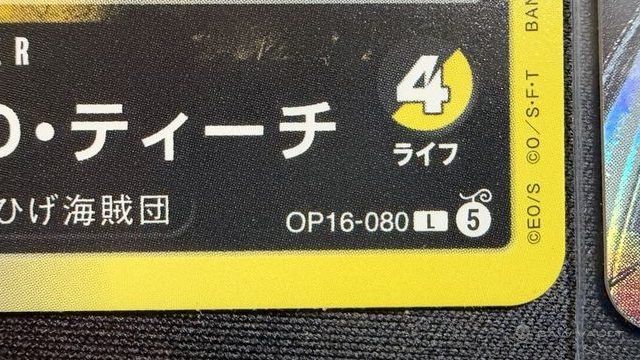
The order runs C, UC, R, SR, SEC for character cards. A Leader is not "above" a SEC; L marks a card type. A strong Leader can still be worth more than most SRs.
Collectors use their own names for some of these. Bandai's term is the one its card list and product pages use:
| Collectors say | Bandai says |
|---|---|
| Alt art | Parallel |
| Manga, manga rare | Super Parallel |
Parallels: same letters, different art
A parallel is a second version of a card with new art or a full-bleed foil. Bandai's database lists each parallel under its base card's rarity, so an SR parallel still reads SR.
What tells them apart on my cards is a small ★ printed above the rarity box. Bandai's own pages do not explain the star, so read it as how the cards are printed, not an official rule.
Not every parallel has one: the Pirate Crew Luffy further down prints plain SEC. Bandai's card list keeps every version of a card under the same number, tagged _p1, _p2 and so on in its image files. I use those tags in this post to point at one exact version.
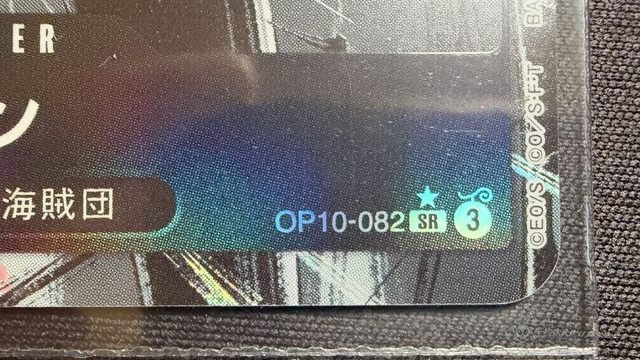
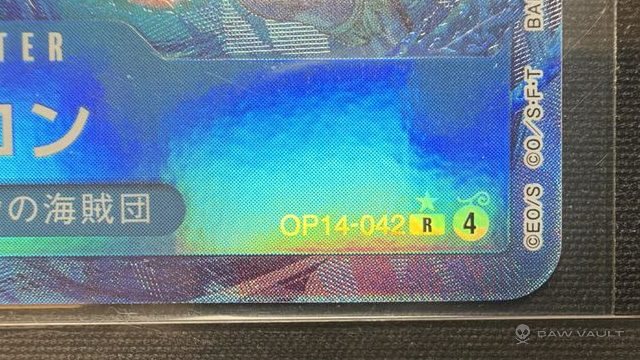
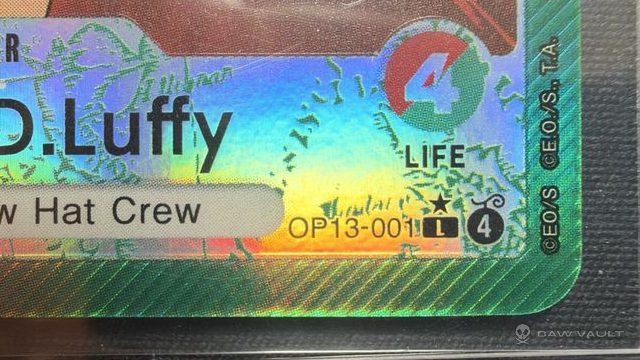
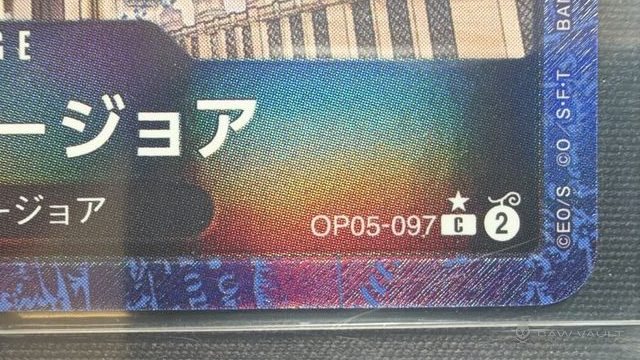
That last one surprises people. Bandai's list shows the OP05-097 Common parallel came from the PRB-02 premium booster, not from OP-05 itself. Check the set when a low rarity looks too shiny.
SP cards
SP stands for Special Card. Bandai's OP-09 page, for example, lists SP cards of characters from OP-04, OP-05, OP-07 and OP-08. They are earlier cards with new art, dropped into a later booster.
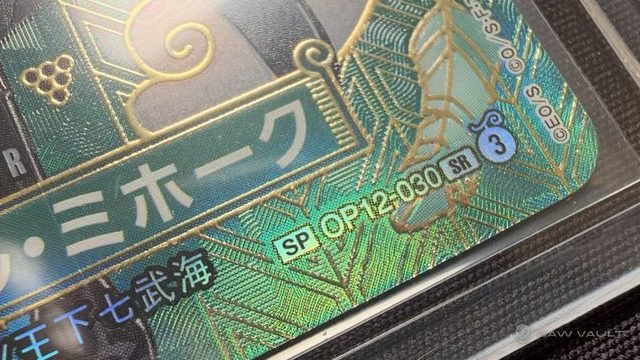
Manga cards are Super Parallels
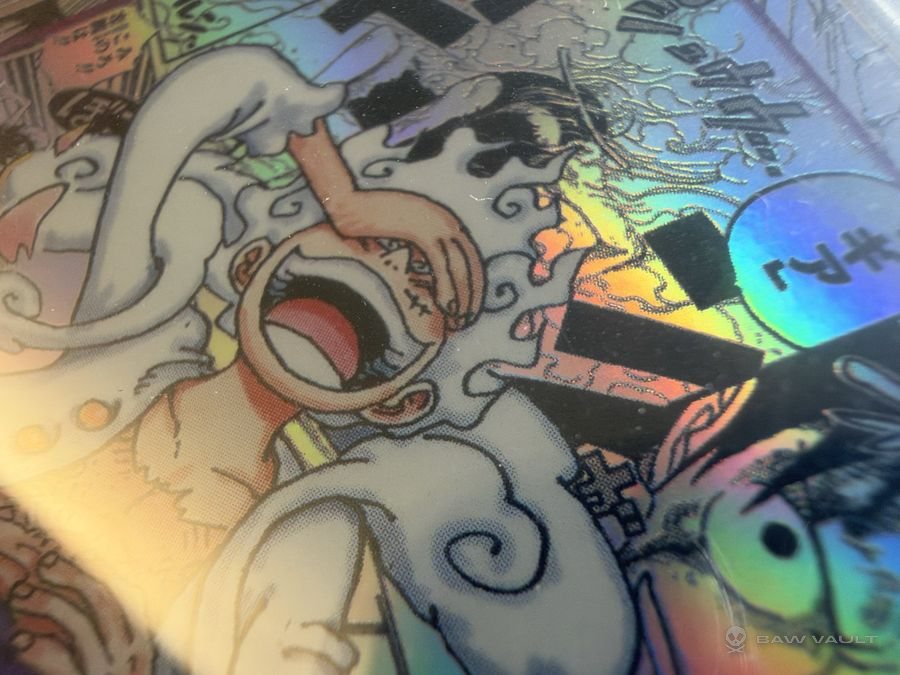
What collectors call a "Manga" card, Bandai calls a Super Parallel. The art is a full manga panel. Mine is the OP05-119 Gear 5 Luffy, the one card I will never sell.
Like any parallel, a Super Parallel keeps its base card's rarity. Mine, OP05-119, reads SEC. Bandai's list shows the Manga Boa Hancock (OP07-051) as SR and the Manga Buggy (OP09-051) as R. The OP-05 product page says earlier boosters had one Super Parallel, OP-05 had three, and OP-09 calls itself the first with four.
Pirate Crew Super Parallels, new in OP-17
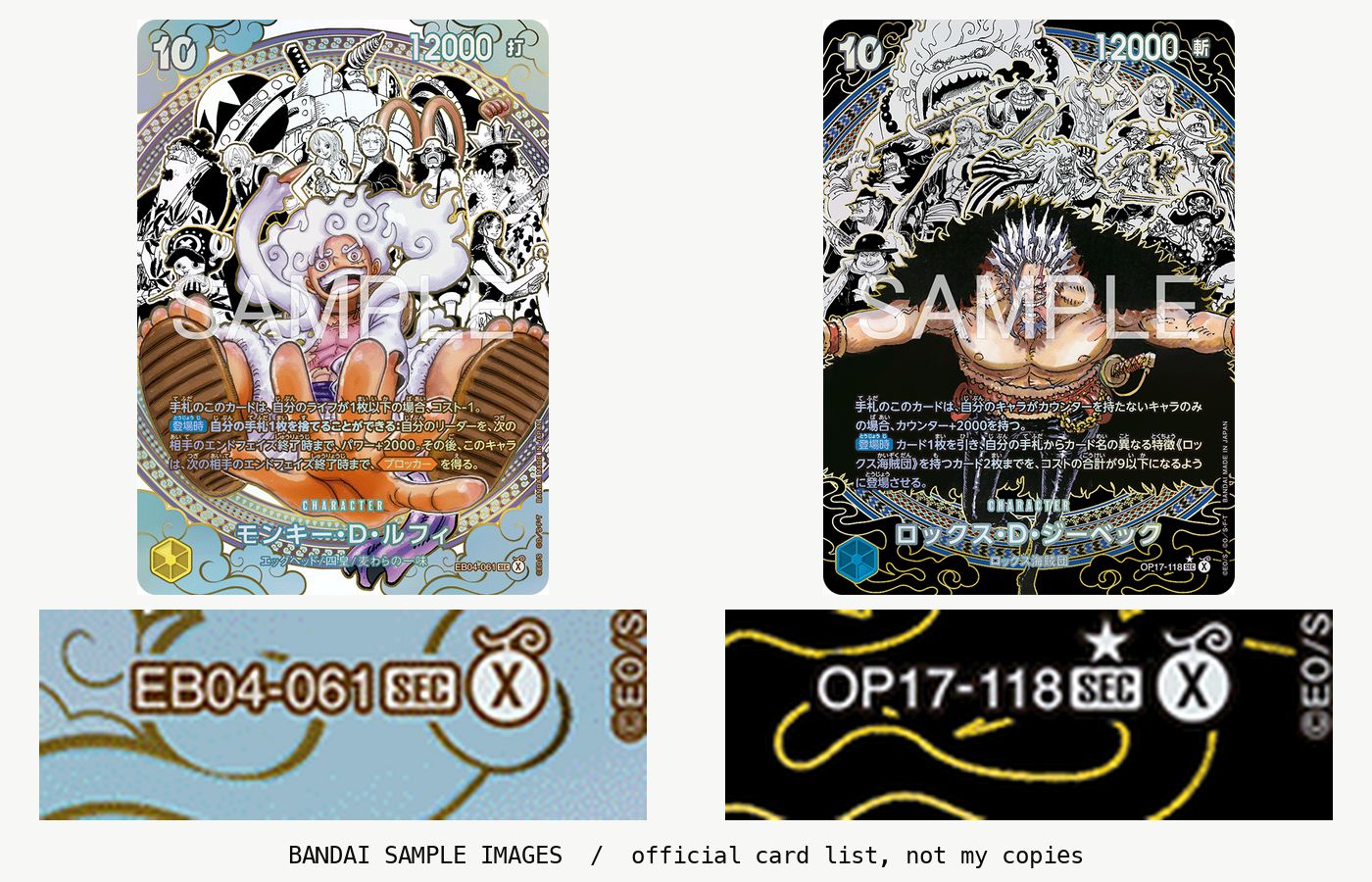
For the game's fourth anniversary, OP-17 added what the official ONE PIECE site announced as a new rarity, the Pirate Crew Super Parallel (海賊団スーパーパラレル). The announcement, on 2 August 2026, named two cards: Monkey D. Luffy and Rocks D. Xebec, captain of the Rocks Pirates. Each shows the captain with his whole crew drawn around him.
Bandai's OP-17 card list, though, files both under SEC. They are parallels, not the base cards: EB04-061_p3, a Gear 5 Luffy that keeps its EB-04 card number although it is printed in OP-17, and OP17-118_p2, the Xebec. The corner reads plain SEC on the Luffy and SEC with a star on the Xebec. So the name is new, but the printed mark is not: you spot one by the crew art, not by the corner.
Super Leader Parallels, new in OP-17
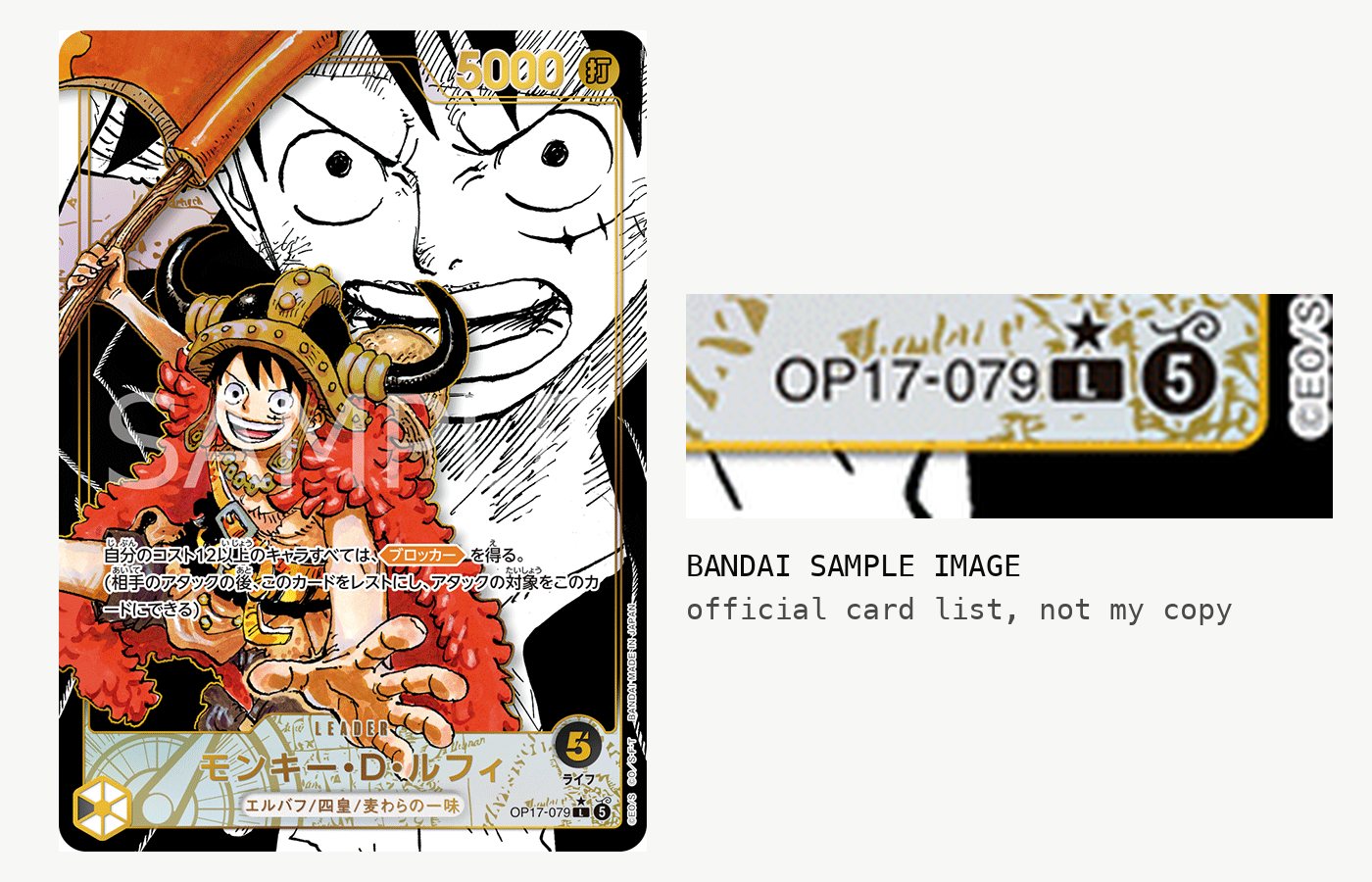
OP-17, released 22 August 2026, added a new kind of parallel. Bandai's product page calls it a Super Leader Parallel: a leader card covered in art from the original manga. Bandai's example is the OP17-079 Monkey D. Luffy leader.
The mark works like every other parallel. The corner reads L with a star, the leader's own mark. It is easy to mix up with the Pirate Crew Luffy above, since both use art from the manga. The Super Leader Parallel is the leader card with a gold frame, and Bandai's OP-17 page uses it as its example.
Treasure Rare (TR)
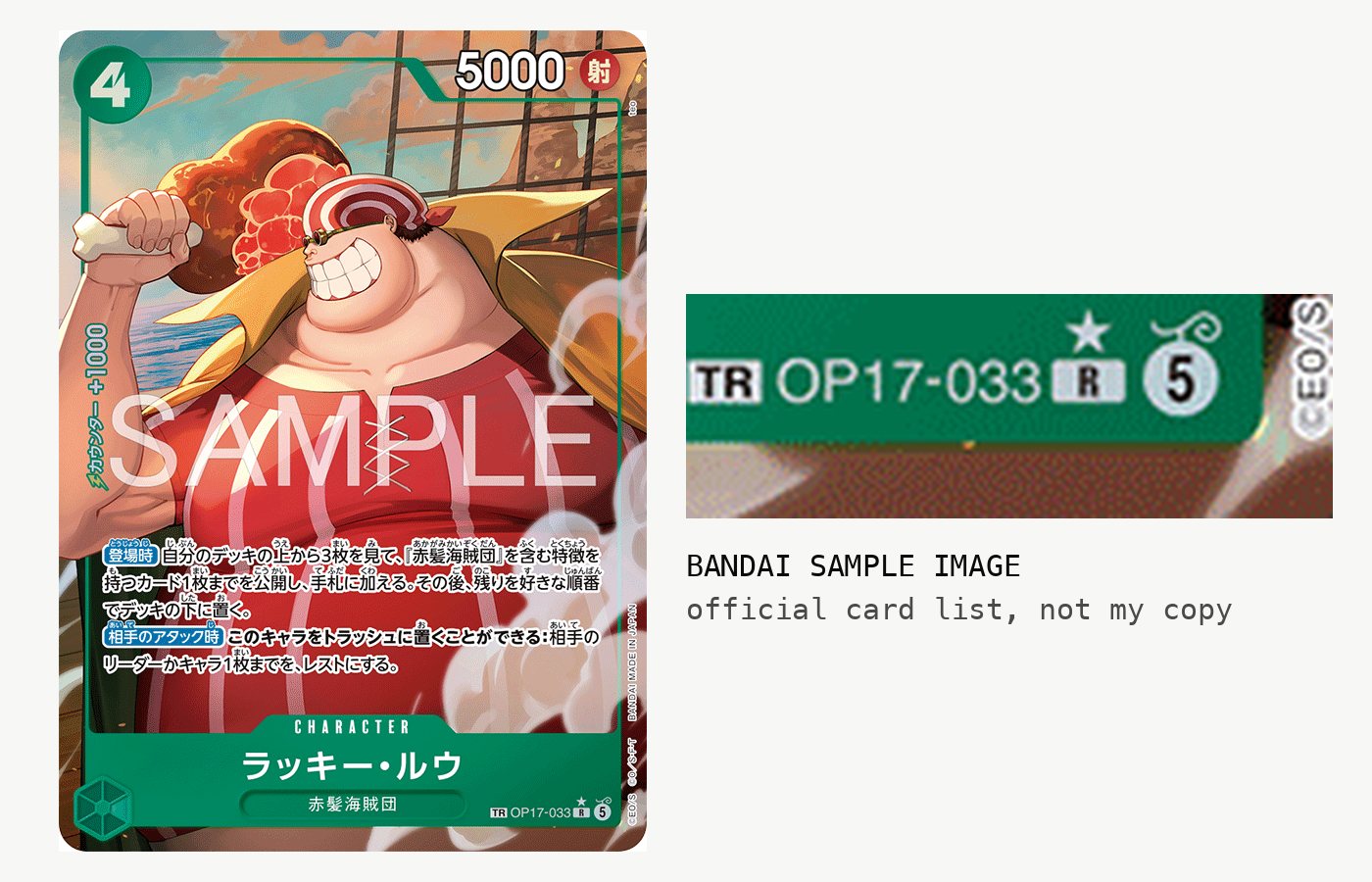
TR arrived later than the other marks. On the English (North America) site it first shows in OP-06. On the Japanese and Asia sites it first appears in OP-16, released 30 May 2026. Bandai's OP-17 page lists one Treasure Rare in that booster: OP17-033 Lucky Roux.
On the Japanese print, TR works like SP: a small tag in front of the card number, while the box keeps the base card's rarity, here R with a star. Unlike other parallels, Bandai's card list files it under TR, not R.
OP-18 comes out in Japan on 21 November 2026. Once Bandai's card list shows it, I will add anything new here.
DON!! cards
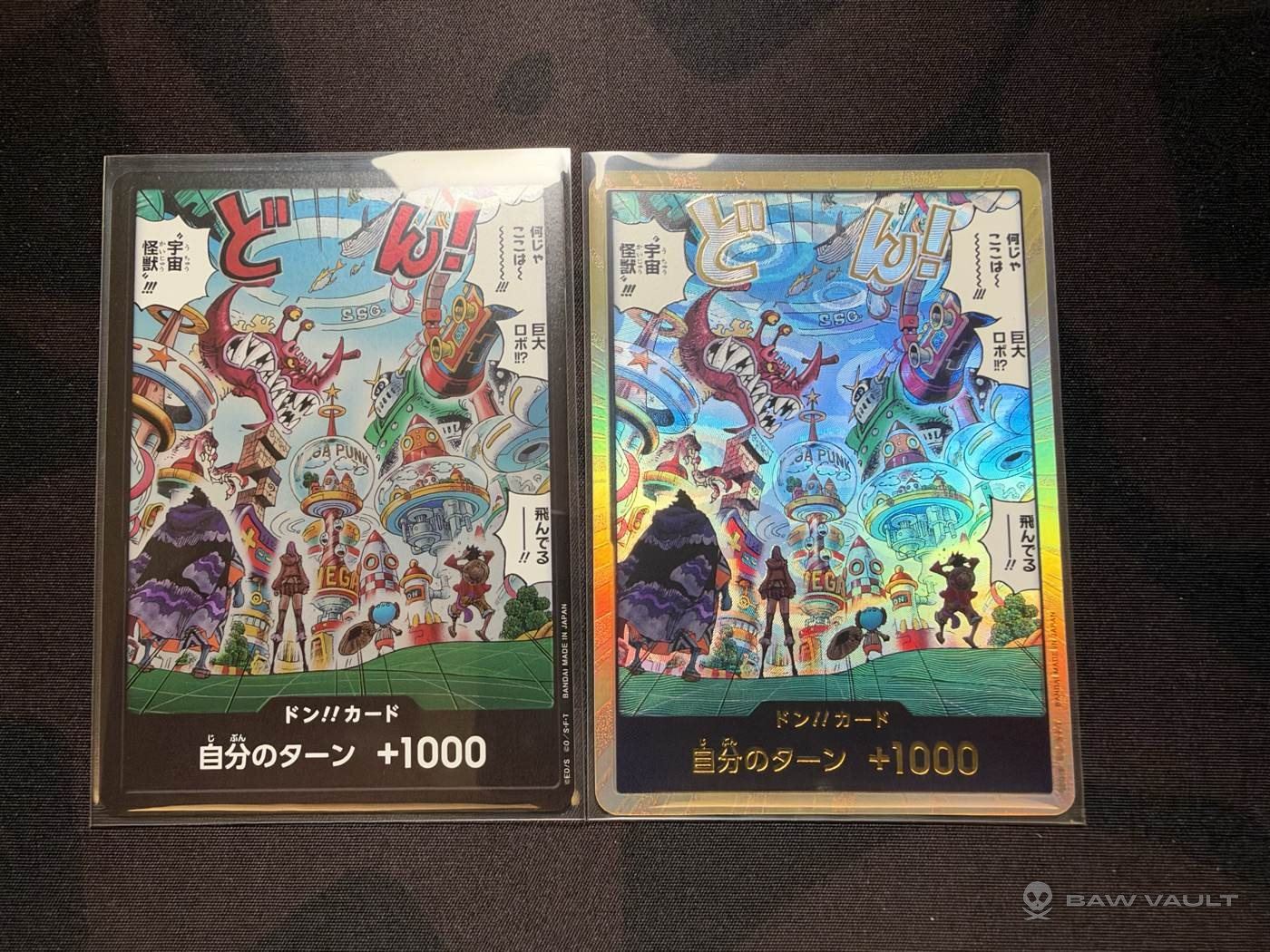
Bandai's product pages list one DON!! card in every booster pack. It is a game resource, not a character, and it carries no rarity mark. Special DON!! cards exist too: Bandai gave gold, silver and bronze ones as Grand Asia Open 2024 prizes.
Promos and prize cards
Promo cards carry a P in the rarity box and a P-number instead of a set code. Tournament prize cards often carry a stamp instead, and some are serial-numbered.
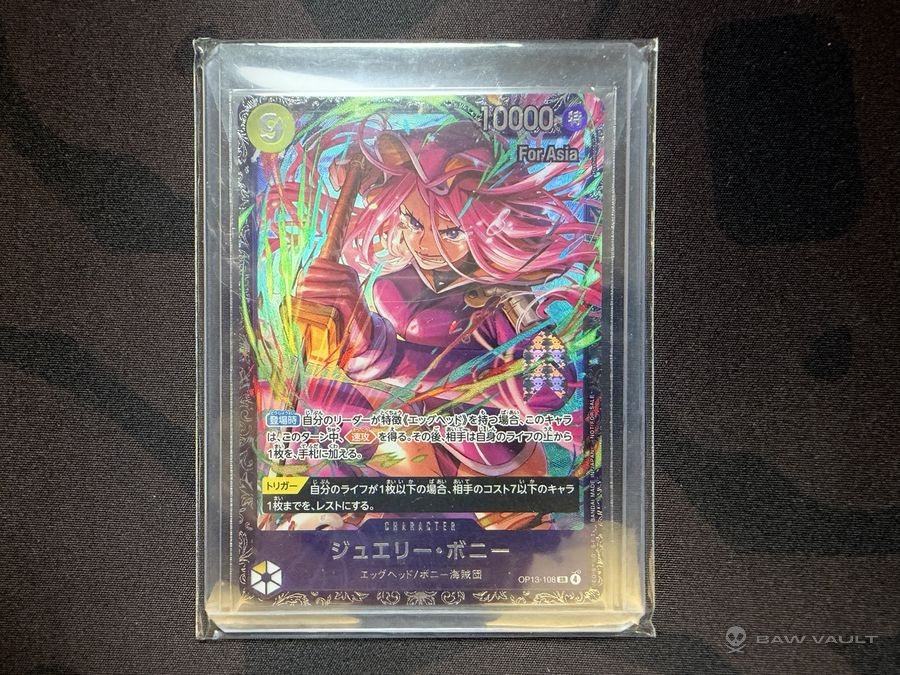
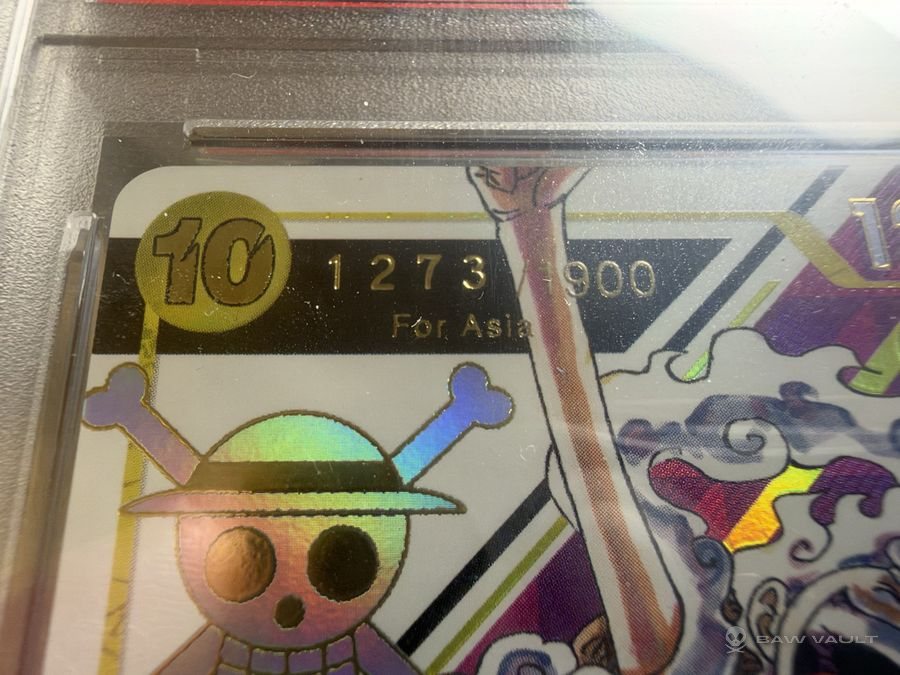
Serial-numbered prizes are official: Bandai's Grand Asia Open 2024 page lists a serial-numbered OP01-120 Shanks for the top 8. Bandai does not publish a name for the stamps, so read them as proof of where a card came from.
The rest of the corner
Two more things sit in the corner, and neither is rarity.
The circle next to it: the block icon
Bandai calls the number in the circle the block icon. From 1 April 2026 it decides which cards are legal in official tournaments, so it matters to players, not to the rarity of a card.
An X in the circle is worth knowing as a collector. Bandai's page says Super Parallels released from April 2026, and the cards that share their number, come with an X. That is the only reason for an X it gives, so on a card printed from April 2026 an X is a strong hint that a Super Parallel shares its number. Bandai's card list gives both Pirate Crew cards above an X.
What the card number tells you
The letters before the dash name the product a card was first printed in. The main prefixes, in Bandai's own terms:
| Prefix | Bandai's product type |
|---|---|
| OP | Booster pack (OP-01, OP-02 and on) |
| ST | Starter deck |
| EB | Extra booster |
| P | Promotion card |
A card printed again, parallels included, keeps its original number, like the EB-04 numbered Pirate Crew Luffy above. Starter decks carry rarity marks too: Bandai's ST-01 list has C, SR and L cards.
Does rarity decide price?
Rarity sets the floor, the character and the version set the price. In my buying, three things move a card more than its letters:
- Parallel or base. A parallel of a popular character usually outsells the base SEC of a less popular one.
- Character. Luffy, Shanks, Zoro and the Emperors pull the most money at most rarities, in my experience.
- Condition and grade. A PSA 10 of a high tier is a different market from the raw card. Whether grading one pays is worked out on real market prices in is PSA grading worth it?
Bandai publishes no pull rates for any rarity. Their pages only say cards are packed at random. If a post quotes "1 Manga per case", it is somebody's count, not Bandai's.
To see what I pay for a card right now, my buylist lists raw and PSA 10 prices, updated from recent sales.
What this means for you
- Read the corner first: card number, letters, and whether there is a ★ above them.
- Check a shiny low-rarity card against Bandai's card list before you pay parallel money for it.
- A "Manga" listing should be a Super Parallel. Check its card number in Bandai's list: the mark follows the base card, so R, SR and SEC are all real.
- Prize stamps and serial numbers are provenance. Ask where a stamped card was won before you buy.
Read next
What case mapping actually is
Why the pattern in where the hits land in a case is real, and why it will not help you pick a box.
PSA grading from Asia: routes, real costs and wait times
Got a high-rarity card worth protecting? How to get it graded from Taiwan and Southeast Asia.
What I pay for One Piece cards
Buy prices for raw and PSA 10 copies, from recent verified sales.