Blog/Kalijoy K CASE review: an all-metal case for graded slabs
Gear review
Kalijoy K CASE review: an all-metal case for graded slabs
I found this on Taobao and bought it myself, long before Kalijoy and I had any arrangement. It is the most solid case I own, and I still would not call it perfect.
The short version
- Aluminium body with stainless fittings, and a handle modelled on an aircraft throttle lever.
- 24 graded slabs in three removable trays of eight. Pull a tray out and that row takes toploaders or semi-rigids instead.
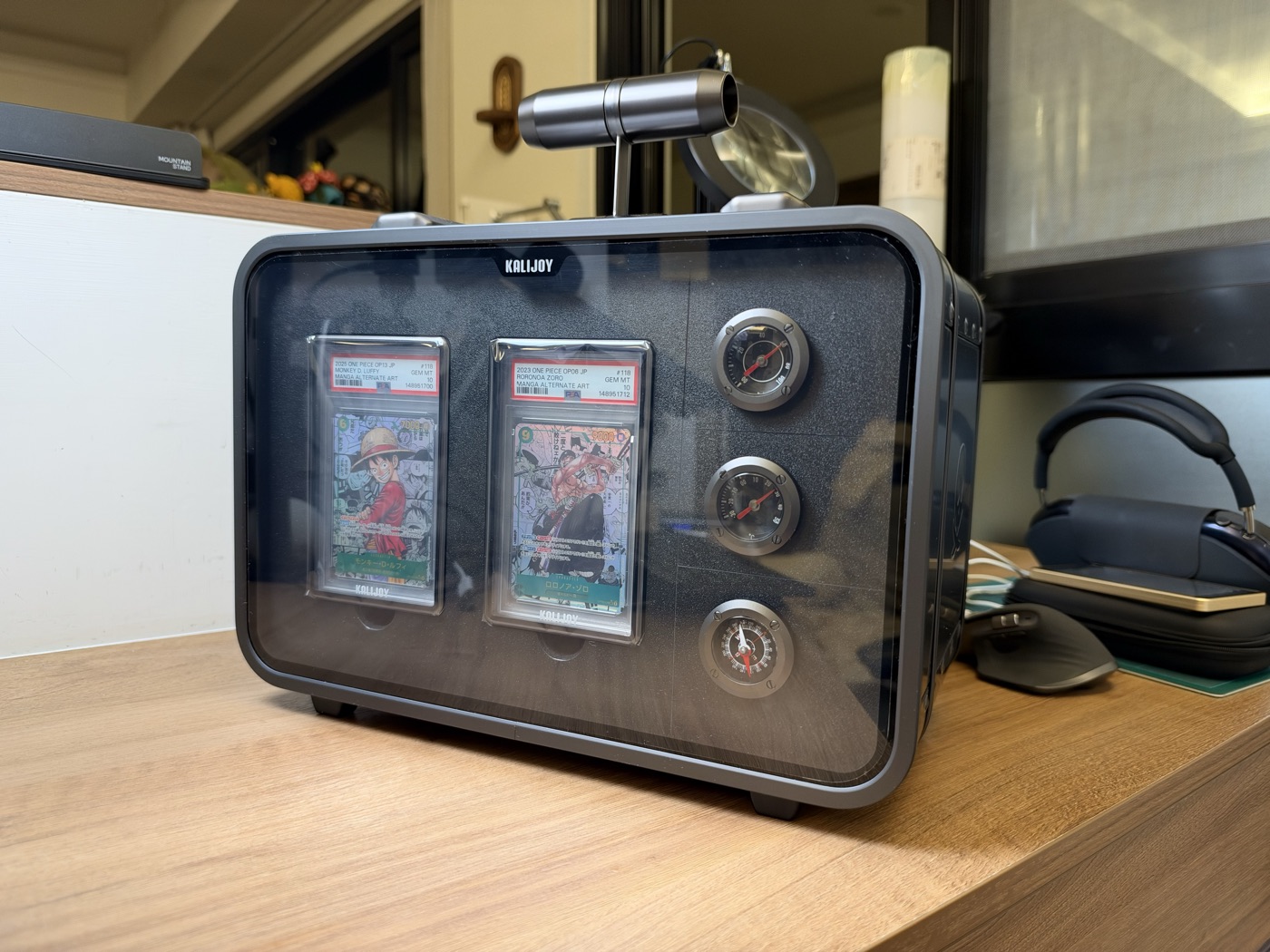
- A front panel displays two slabs behind acrylic, but only in Kalijoy's own holders. Two come in the box.
- No lock, on a 599 USD case. That is the first thing I would change.
- Three dials (humidity, temperature, compass) sit where a third display slot should be.
What it actually is
I buy and sell One Piece and Pokémon cards out of Kaohsiung, and this is the case my graded stock lives in. Kalijoy is a Chinese accessories brand that is genuinely well known at home. If you spend time on Douyin or Xiaohongshu you have probably seen them, and they run booths at the big mainland card shows like Cardjoy. What is new is that they have only just started selling internationally, which is why almost nobody outside China has handled one of these.
The K CASE is a storage case for graded slabs, and the unusual part is the material. Most cases at this end of the market are carbon fibre, like Zion Case or Dragon Scale, and the cheap ones are moulded plastic. This one is aluminium, with stainless steel for the handle and the fittings.
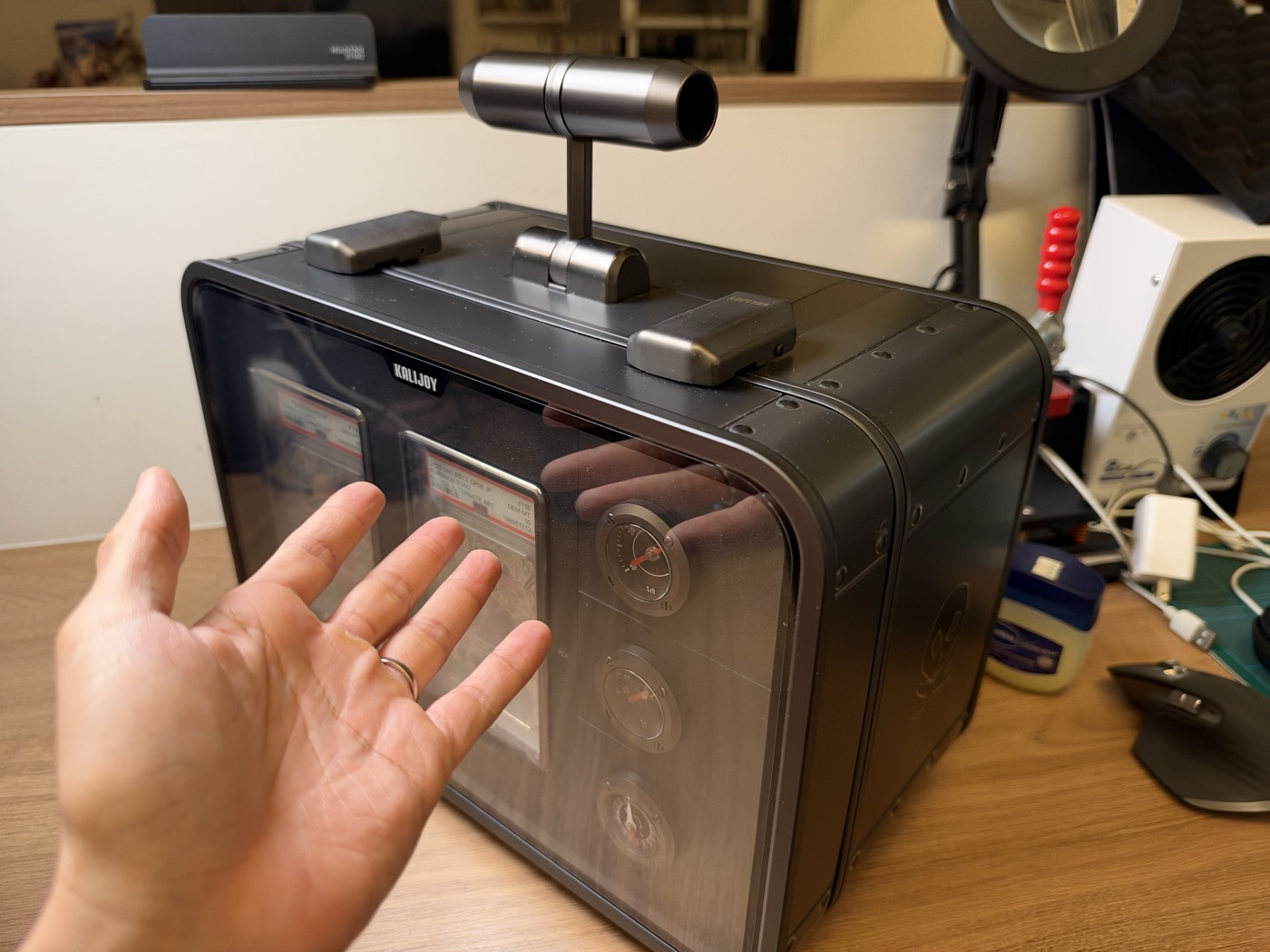
The original unboxing and walkthrough, 12 minutes, with English and Traditional Chinese subtitles.
The build
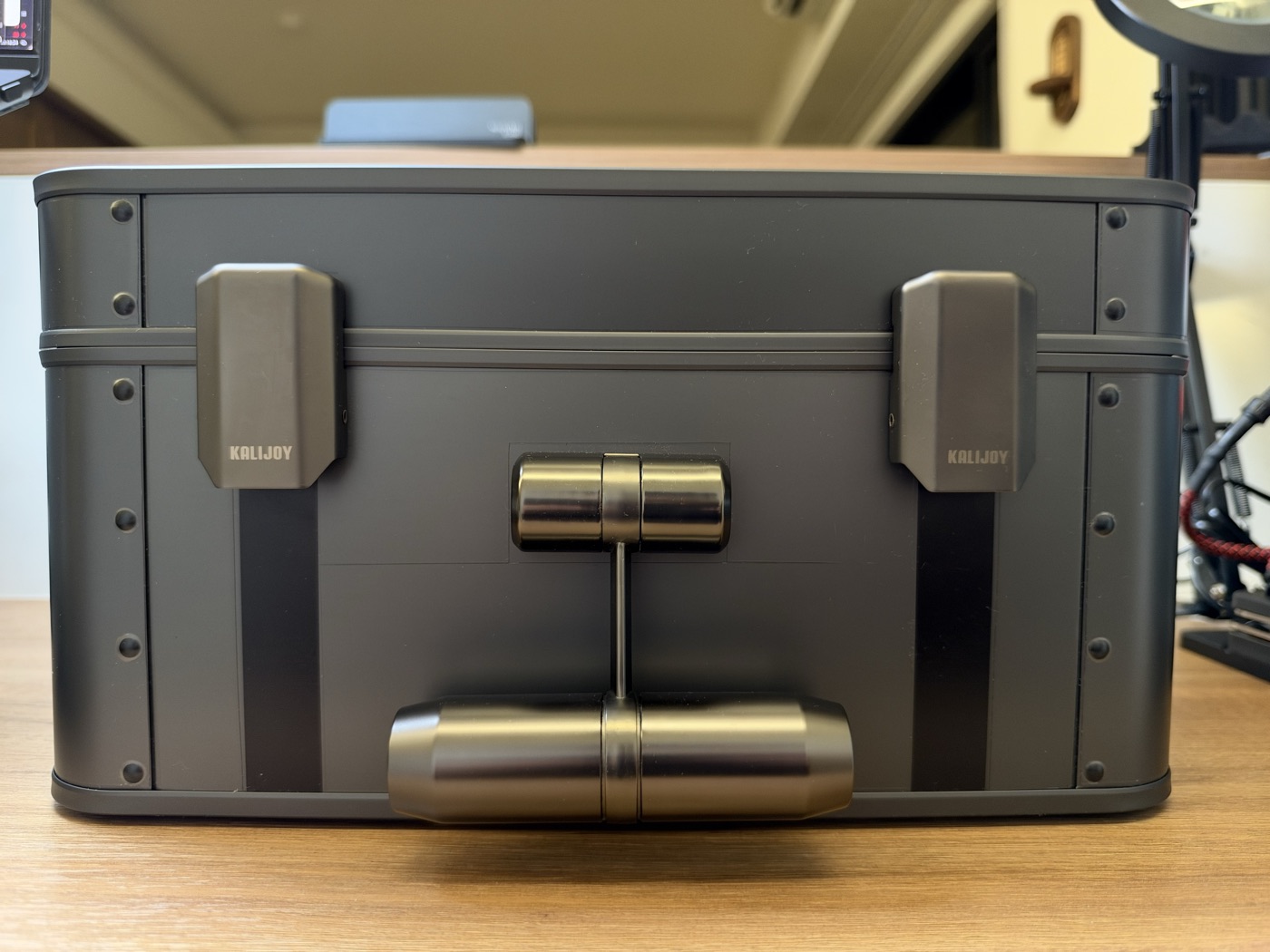
The handle is the detail people notice first. It is modelled on an aircraft throttle lever, and it moves through detents so you feel each position as you fold it. That could easily have been a gimmick and it is not: it is comfortable, and it feels solid under the weight of a full case.
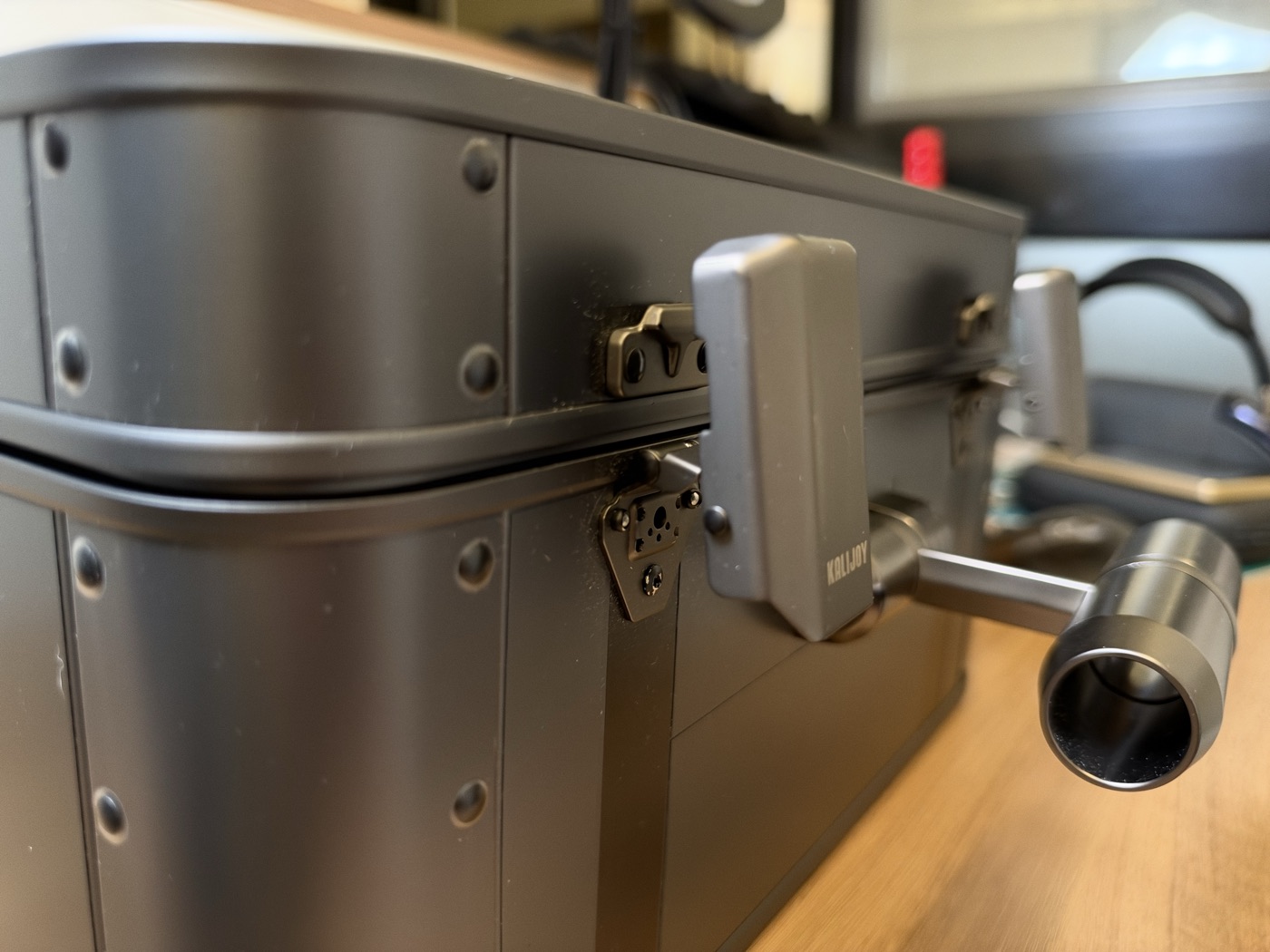
Four rubber feet sit on the back so it can stand upright. The four on the bottom are plastic rather than rubber, which is a small inconsistency on a case that is otherwise metal wherever you touch it.
How much it holds
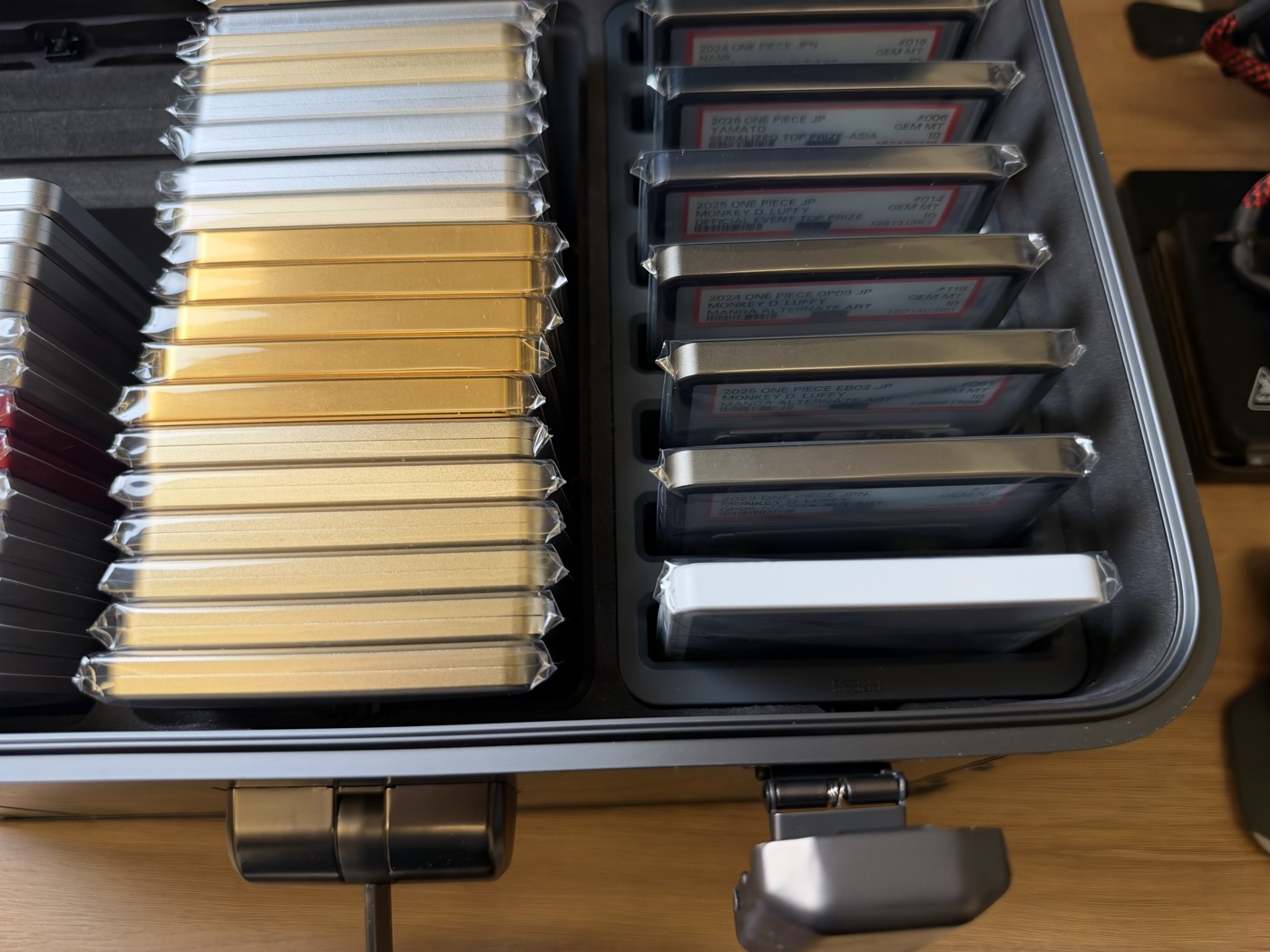
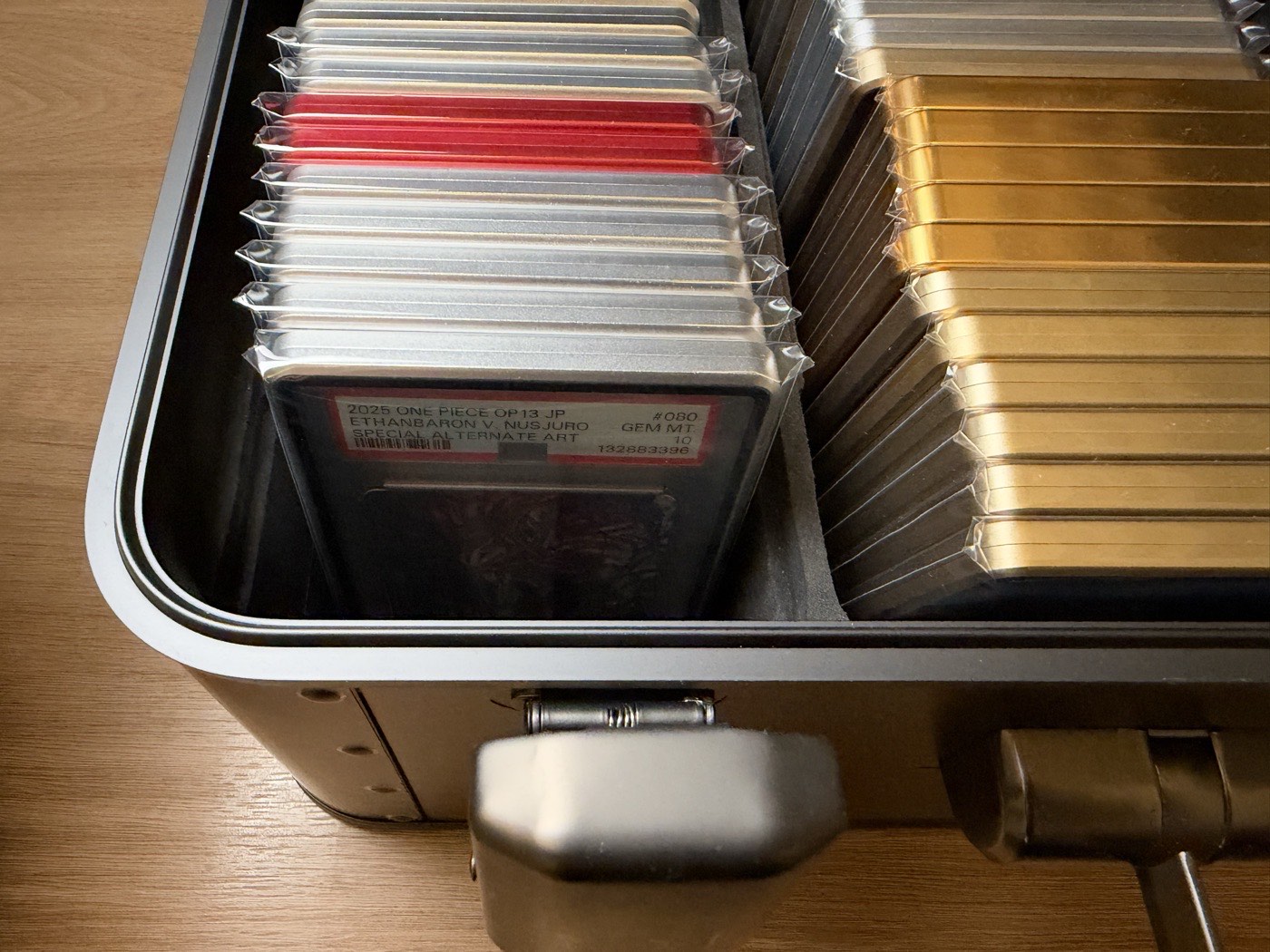
Three rows, each with a removable tray, and each tray takes eight graded slabs. That is 24 in trays.
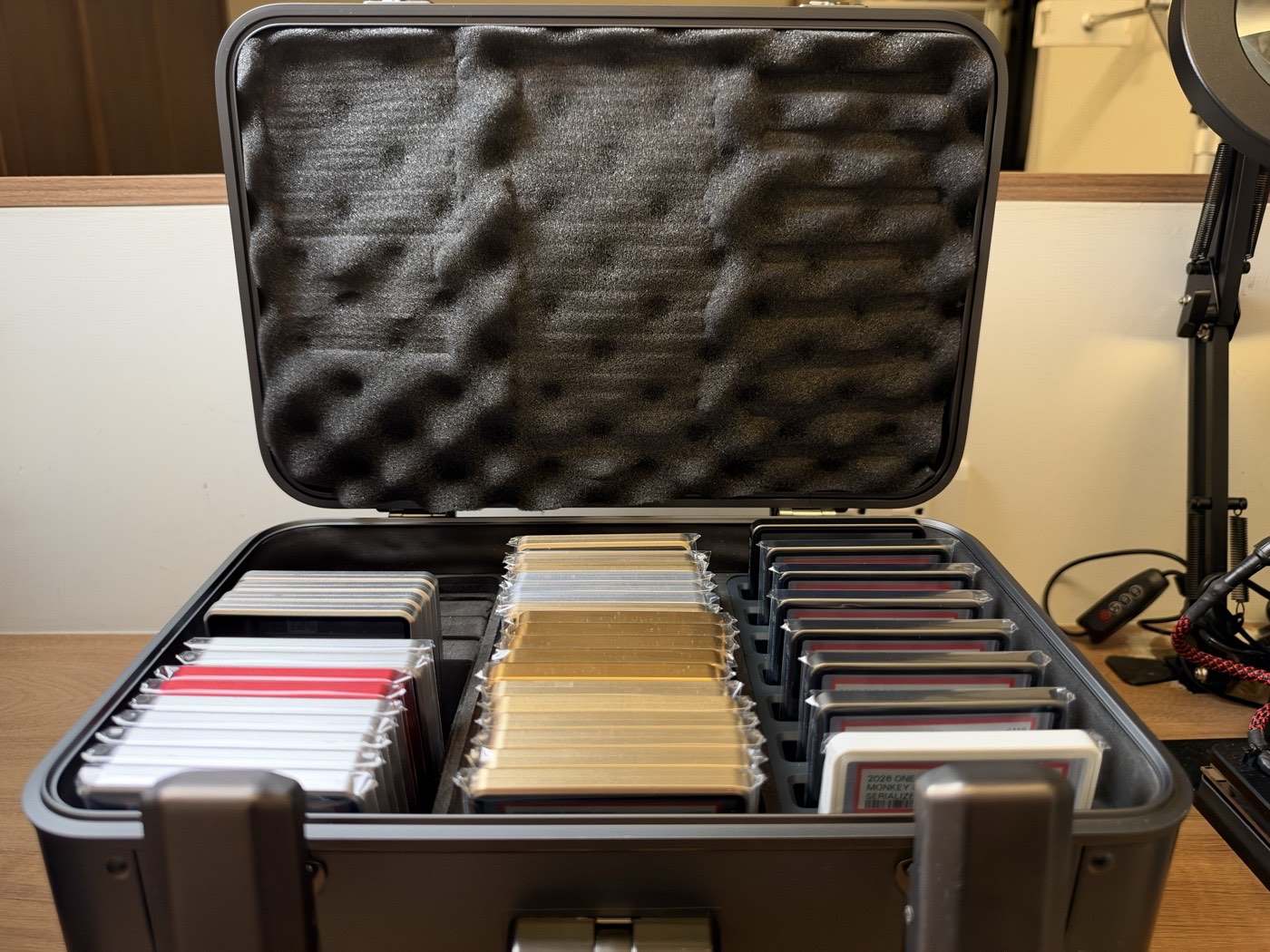
The trays are the part I did not expect to like. Press the two catches and a tray lifts out, and now you have a full open row. That row will take toploaders, semi-rigids, or loose PSA and BGS slabs stacked however you want, and a solid foam divider is included to separate them. So the case is either a 24-slab display or a bulk transport box, depending on how many trays you leave in.
The front display panel
The front of the case is a large acrylic window over a panel that holds two slabs face out, so a full case still shows you two cards. The panel drops down on a hinge once you release a catch at the top.
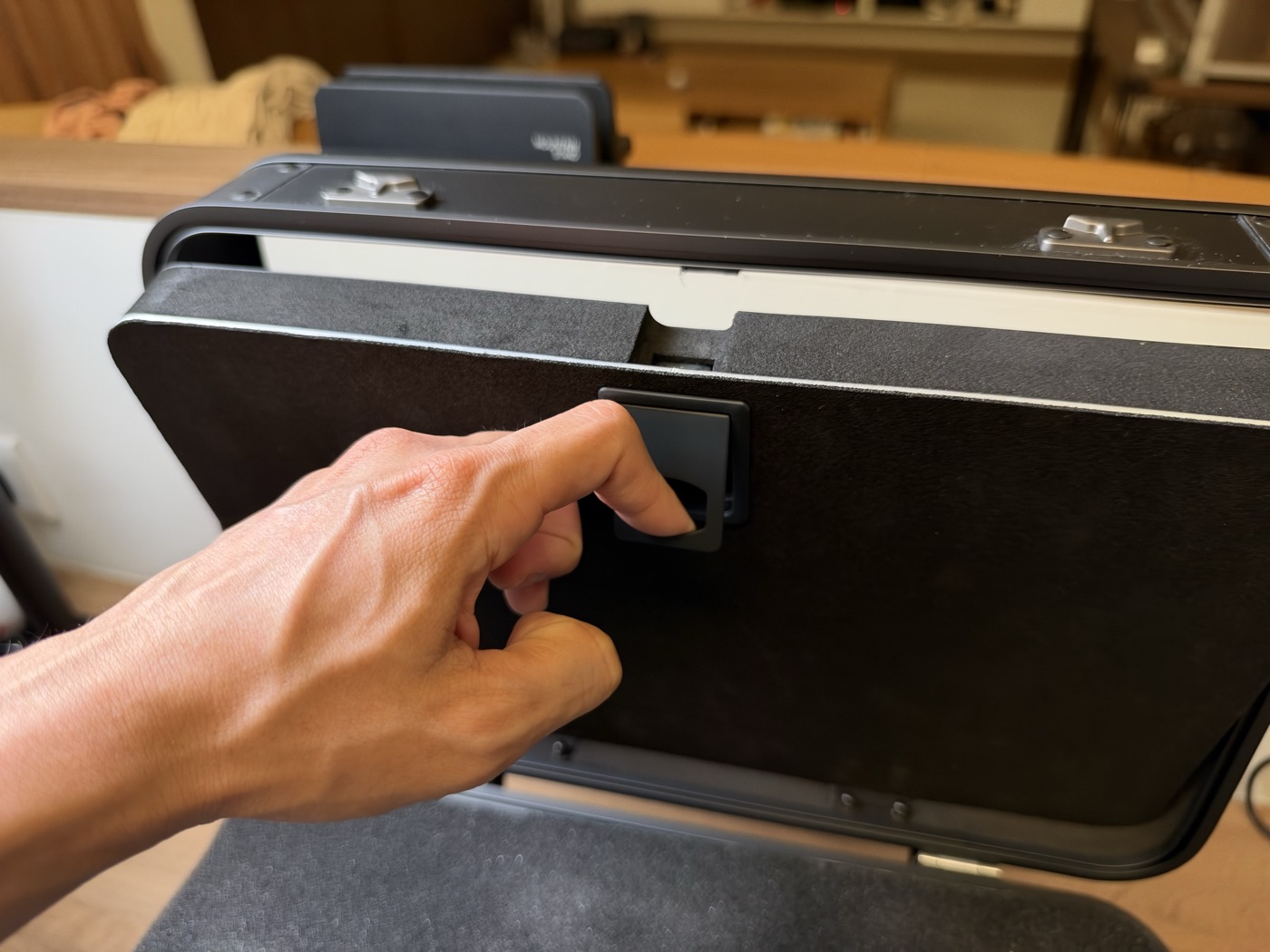
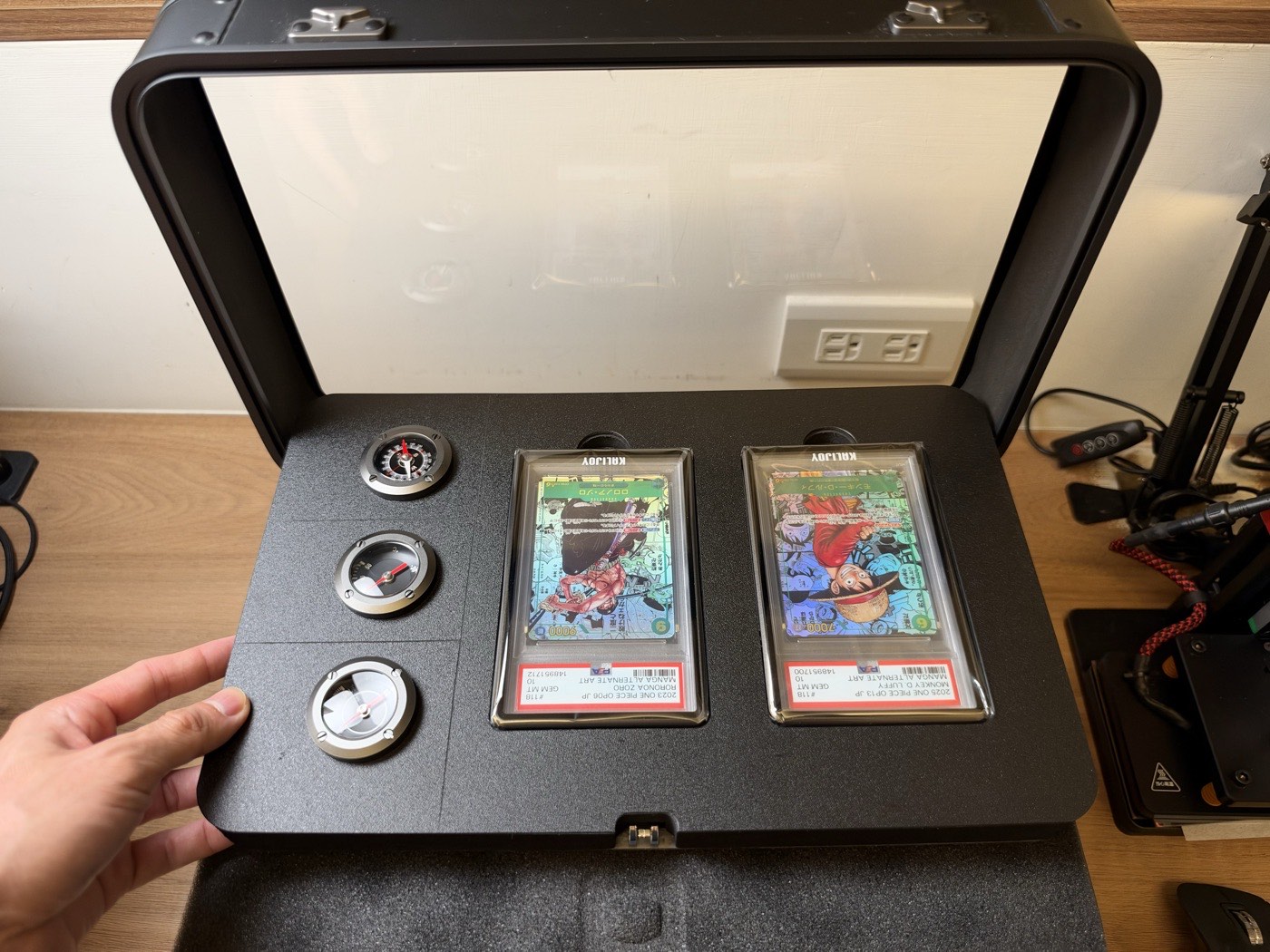
One thing to know before buying: the display slots take Kalijoy's own holders, not a bare slab. Two come in the box, so you can fill both slots on day one, but swapping in different cards later means buying more of their holders.
What I would change
There is no lock
This is the real one. At this price, which was above the American cases I priced up before buying, the latches are plain clasps. Most cases in this category give you a combination lock. This gives you nothing, so it protects cards from damage but not from anybody who picks it up and walks.
The three dials
Humidity, temperature and compass. The humidity one I can at least argue for in a Taiwanese summer, though I would not call it a reason to buy. The temperature one is marginal. The compass is decoration.
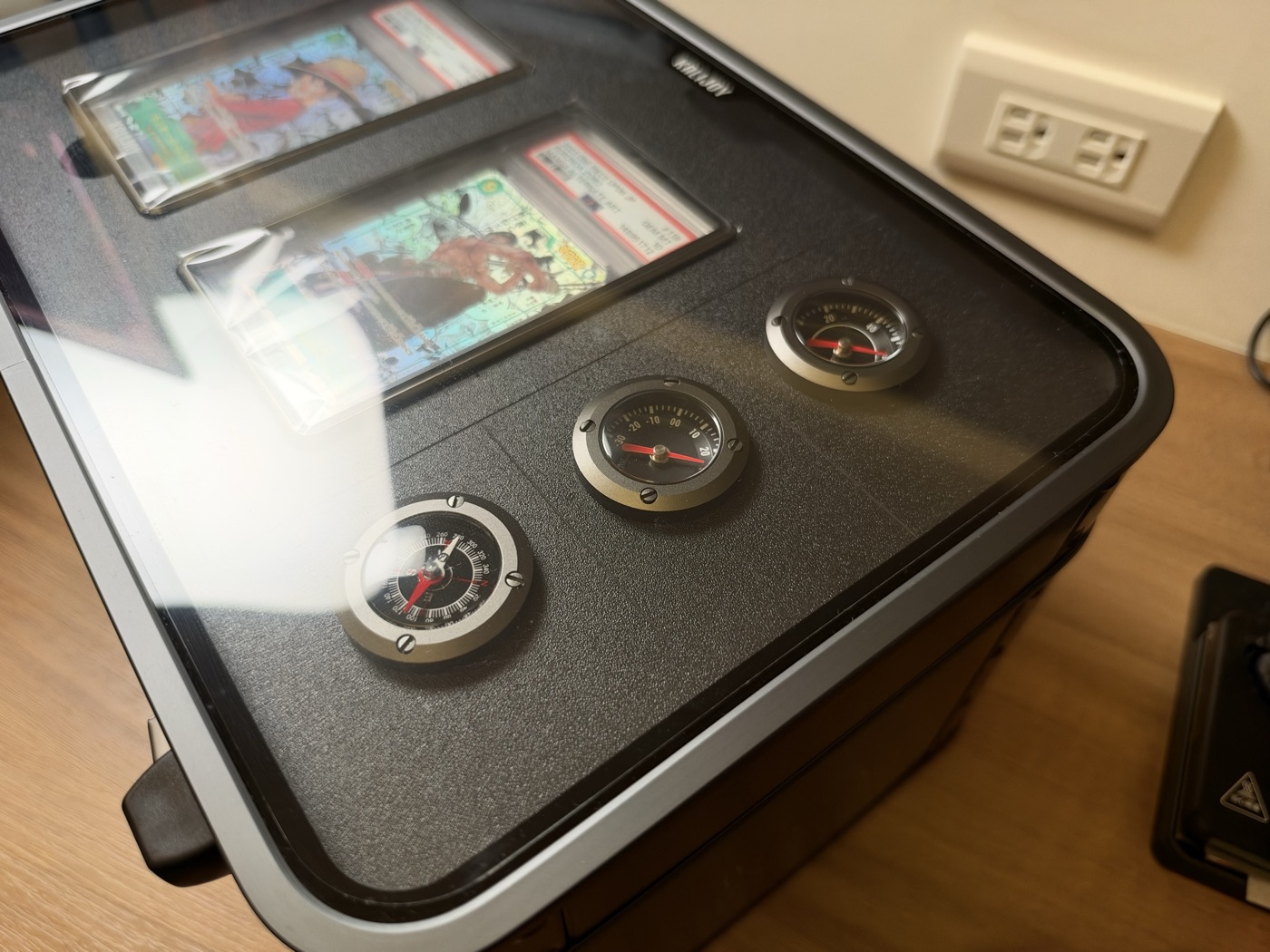
They take up the space where a third display slot would go, on the one surface of the case that people actually look at. Move them to the top or the side and nothing is lost.
The lid springs open hard
Release both latches and the lid comes up with some force, which over time can let the metal edge mark the interior. On my older unit I wrapped the case in matte TPU, the same film used on cars, mostly to protect the aluminium finish. That is a fussy thing to do to a case that holds cases that hold cards, and I am aware of it. It is also what I actually did.
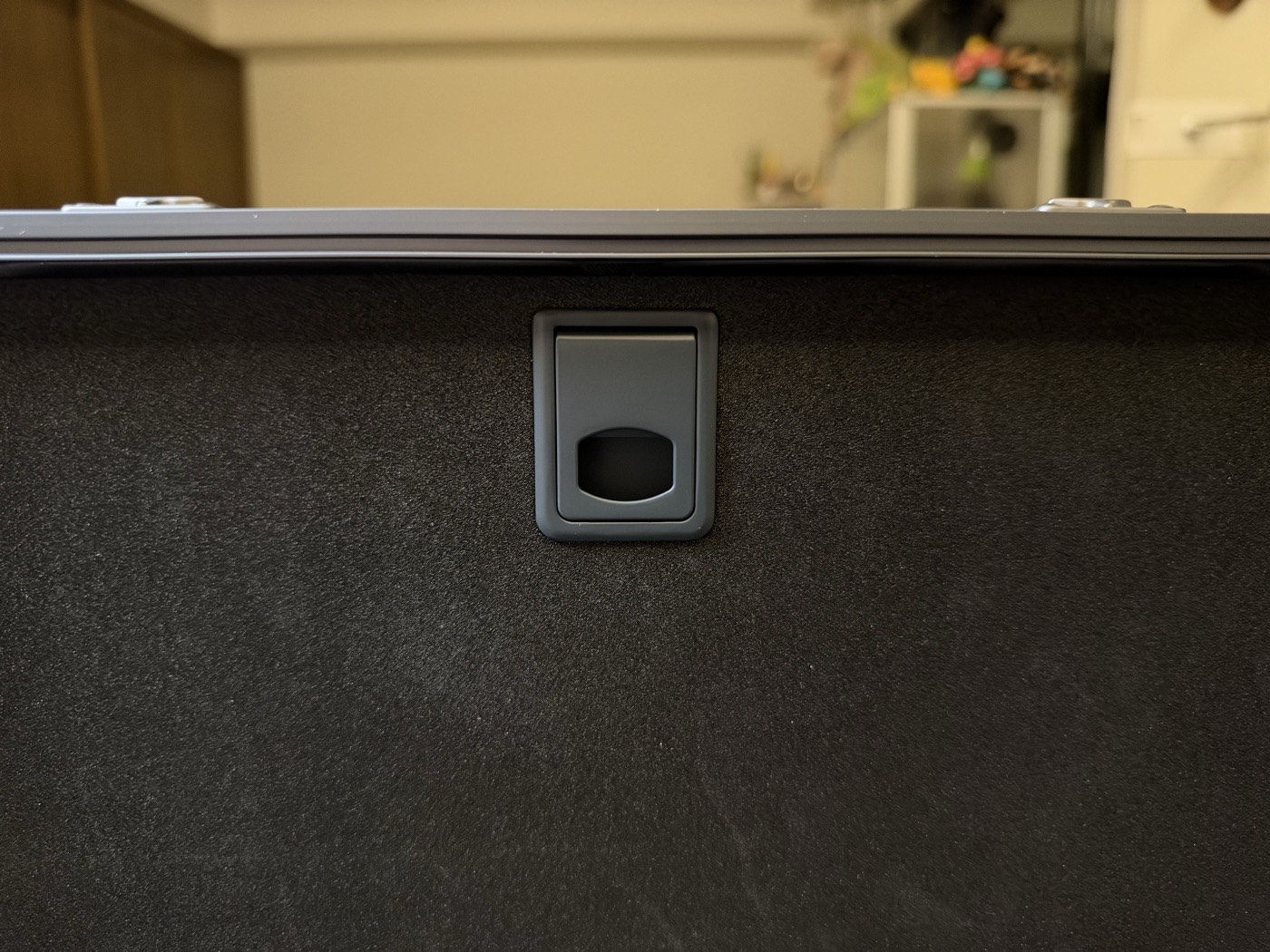
The tray catch is light
The catch holding each removable tray is plastic and does not feel like the rest of the case.
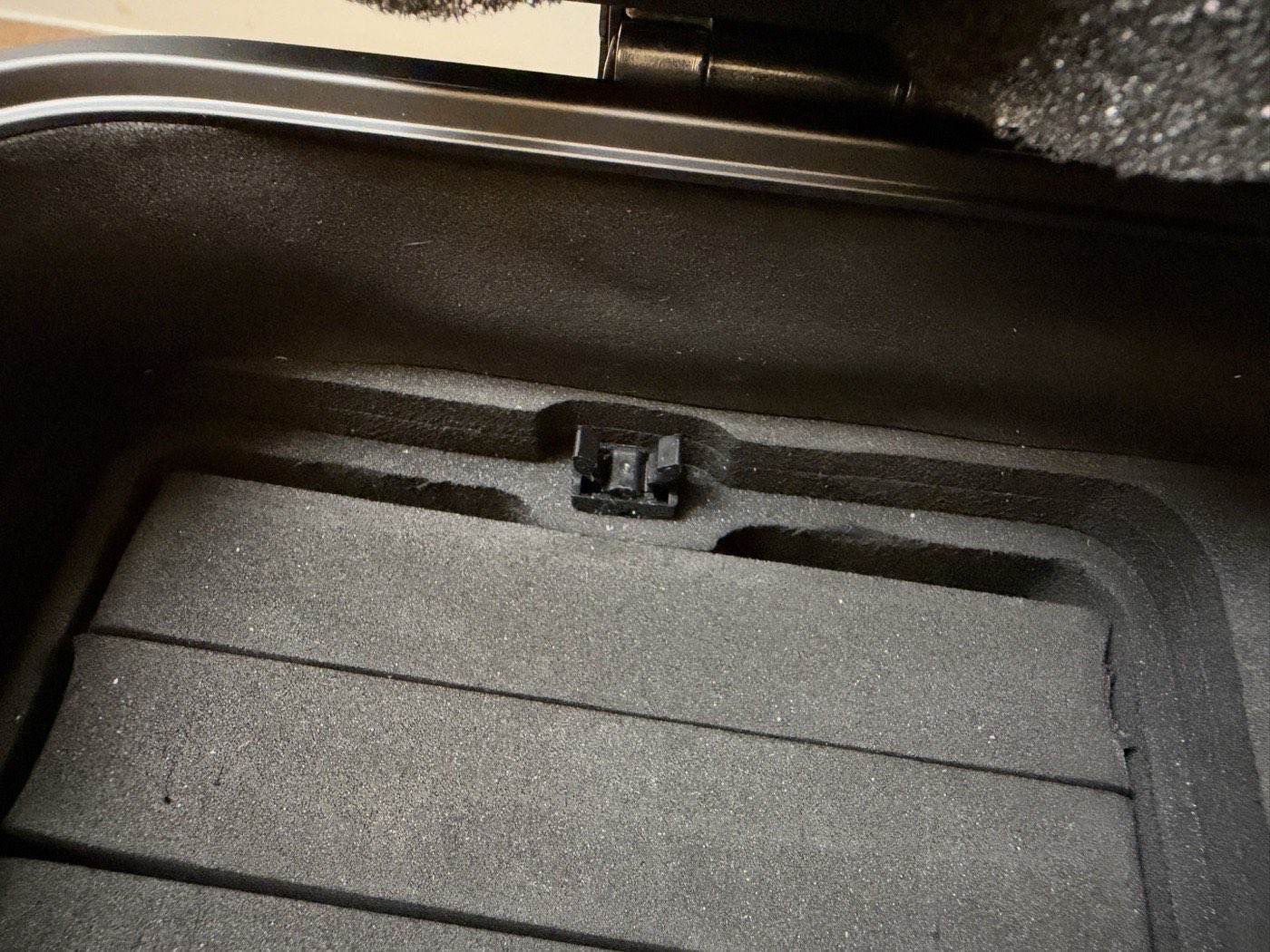
Worth saying that the older version of this case had a genuinely flimsy plastic catch on the front panel that people did break. The current version has been redesigned and that catch is now solid, so they do appear to fix things between runs.
Who should buy it
Buy it if you want an all metal case, you move graded cards around, and you want the flexibility of switching rows between trays and bulk. Nothing else I have handled does the tray-or-bulk thing this cleanly.
Buy something else if you need a lock, if 24 slabs is not enough and you were not going to pull the trays anyway, or if you simply cannot justify the money. A plastic case with a combination lock protects against more realistic risks for far less, and there is nothing wrong with that choice. If you are working out what your storage should cost in the first place, that is really a budgeting question, and I wrote about how to set that number separately.
Price, and where to get it
It lists at 599 USD at the time of writing. When I made the video the case was out of stock and there was no realistic way for anyone outside China to buy one, which is why I said then that I was not promoting it. That has changed: their international store is live and the case is in stock, which is the only reason this page exists.
Kalijoy pays me a commission on sales through this link, and BAWVAULT10 takes 10% off. The code is not stackable with their other offers. I bought my own case before any of that existed, and nothing above was changed for the arrangement.